
If you’re a content creator or marketer right now, you’re facing the exact same question millions of others are asking: Where should I actually focus my short-form video efforts?
The short-form video landscape has completely shifted. Short-form video now drives 2.5x more engagement than long-form content, according to 2026 data and that gap is only widening. Both Instagram Reels and YouTube Shorts are aggressively pushing short-form content, but they work in completely different ways.
Here’s the reality: treating Reels and Shorts as interchangeable is costing creators real reach. Reels rewards trend participation and visual polish, while Shorts rewards value density and watch time. The same clip can perform on both but only if you understand what each algorithm is actually scoring.
This guide breaks down everything that matters: algorithm mechanics, reach potential, monetization, audience intent, and exactly which platform makes sense for YOUR content. By the end, you’ll know where to invest your time first.
Understanding the Core Differences: Reels vs Shorts
Before you pick a platform, let’s clarify what you’re actually working with.
What Are Instagram Reels?
Launched in August 2020 as Meta’s answer to TikTok, Reels allows users to record and share vertical videos up to 90 seconds. Instagram Reels integrate directly into your main feed, with content pushed to both followers and the broader Explore ecosystem.
The experience feels native to Instagram—you’re sharing content within a platform most of your audience already uses daily.
What Are YouTube Shorts?
YouTube Shorts are Google’s competing format: vertical videos under 60 seconds served in a dedicated Shorts feed. Unlike Reels, Shorts exist alongside YouTube’s massive long-form ecosystem, which actually matters more than you’d think.
Key distinction: YouTube offers a revenue sharing model through the YouTube Partner Program. Eligible creators earn a portion of the ad revenue generated between Shorts in the Shorts feed.
The Algorithm Battle: How Each Platform Actually Promotes Content
This is where your strategy should start. Understanding algorithm differences is everything.
YouTube Shorts Algorithm: The Watch Time Champion
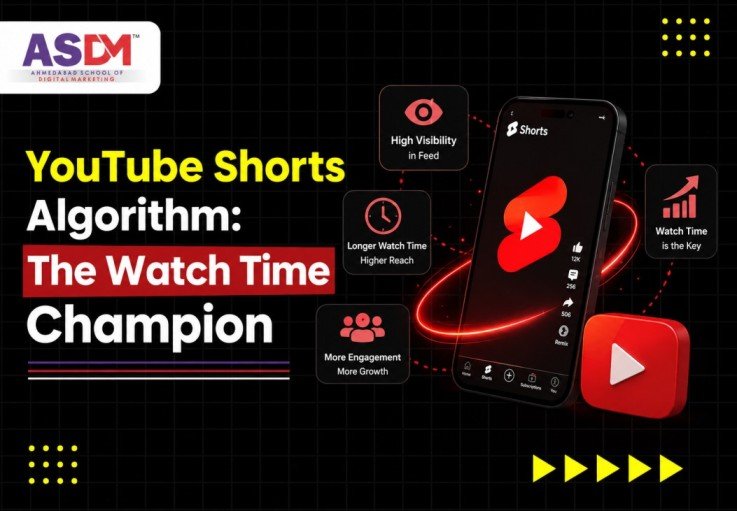
YouTube has been refreshingly transparent about what actually matters for Shorts. The YouTube Shorts algorithm prioritizes watch time above everything else. A Short that gets 10,000 views with 30% average view duration will underperform a Short that gets 1,000 views with 80% average view duration.
Here’s how the YouTube Shorts algorithm actually works:
Phase 1: The Test Your Short is shown to a small seed audience some of your existing subscribers plus a small group of non-followers with matching interests. If performance is strong (60%+ watch time, low swipe-away rate), it moves to Phase 2. If performance is weak, the algorithm caps distribution.
Phase 2: The Expansion If Phase 1 performs well, your Short expands to a much larger pool of non-subscribers who’ve watched similar content. The algorithm is still measuring the same metrics.
Phase 3: The Global Feed Only the best-performing Shorts reach the global Shorts feed where they compete with the absolute best content from your entire niche.
What This Means for You:
- Target metric: 60% average view duration minimum. 80%+ is elite.
- The first 2 seconds determine everything—nail the hook.
- Engagement (likes, comments, shares) multiplies good watch time but can’t save poor retention.
- Only “Engaged Views” count toward YouTube Partner Program eligibility and revenue payouts.
2026 Algorithm Update: Viewer satisfaction surveys now carry more weight than raw watch time. YouTube opened Shorts monetization to more creators and began weighting Shorts engagement more heavily in channel-level recommendations.
Instagram Reels Algorithm: The Trend & Shareability Game
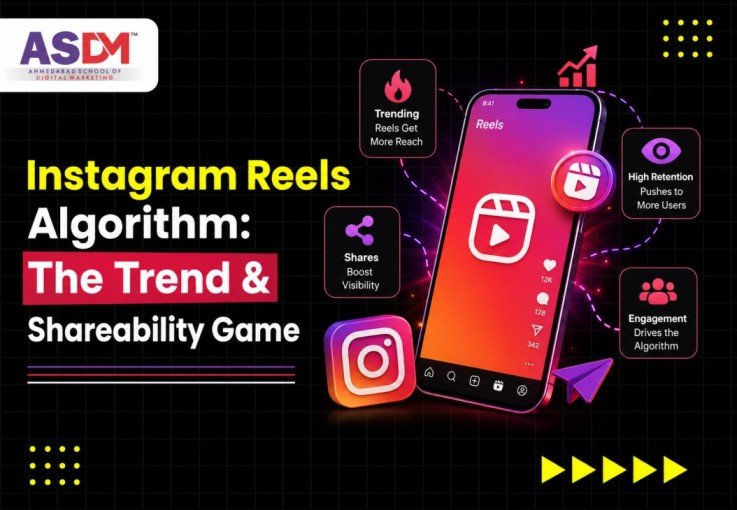
Instagram’s algorithm works fundamentally differently. While YouTube optimizes for watch time, the Instagram Reels algorithm favors content that keeps viewers engaged, with watch time being one of the most important factors, especially in the first few seconds.
But here’s the difference: Instagram has a much stronger emphasis on trend adoption and shareability.
How Instagram Tests Content:
In Stage 1, your Reel is shown to a seed audience. The algorithm watches for early engagement signals—especially shares via direct message (DM sends are weighted heaviest).
For reels, sends via DM are the most heavily weighted signal for distribution. This is crucial. When someone sends your Reel to a friend, that’s a massive signal to expand distribution.
In Stage 2, if engagement exceeds the threshold, Instagram shows it to progressively larger audiences—first non-followers in your niche, then potentially the broader Explore feed.
The Trending Audio Window:
This is Instagram’s most powerful distribution lever. Post your Reel within 24-48 hours of spotting a rising sound. Instagram’s algorithm gives the strongest boost to early users of trending audio.
By the time a sound hits 100K Reels, the boost window is already closing. Many Instagram Reels trends start on TikTok 3-7 days earlier. If a sound is going viral on TikTok but has fewer than 5,000 Reels on Instagram, you’ve got a head start.
What Actually Drives Reach on Instagram:
- Trending audio (but niche-specific, not generic)
- Watch time in the opening 3 seconds
- Shares via DM (the biggest signal)
- Engagement (likes, comments, saves)
- Caption keywords (Instagram SEO is real)
Reach & Engagement: Which Platform Gets More Views?
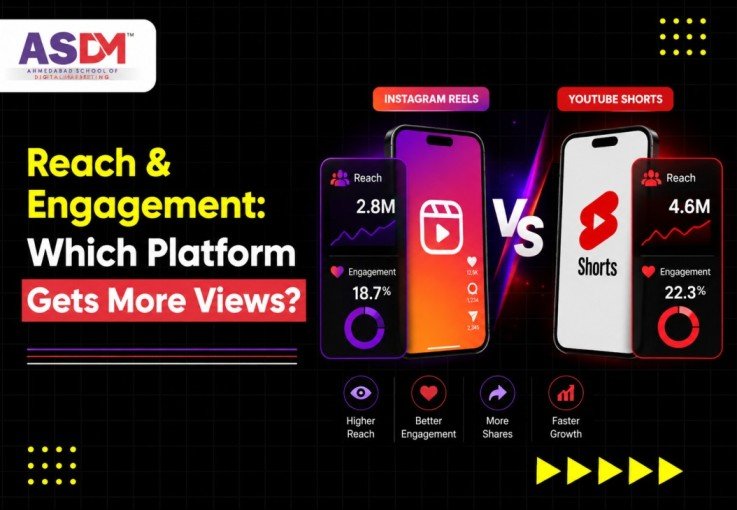
Let’s talk numbers. Where can you actually build an audience faster?
Instagram Reels: Fast Virality, Follower-Dependent Growth
Instagram Reels currently offers higher immediate virality potential for trend-based content. If you jump on a trending audio, you can get 100k views overnight even with a small following.
The Advantage: If you nail the trend timing, reach explodes fast. Instagram Reels shows content to your followers first and then expands to new audiences based on performance. Follower count gives you an initial distribution boost.
The Challenge: Building reach on Instagram Reels without an existing follower base takes more time and effort compared to YouTube Shorts.
Reach Timeline: Peak exposure within 48 hours best for trend-driven marketing and product hype.
YouTube Shorts: Slow Burn, Long-Tail Consistency
YouTube Shorts don’t promise instant virality. Instead, you get something more valuable for long-term growth: compounding reach.
YouTube Shorts remain discoverable for months — great for consistent traffic and lead nurturing. Even older Shorts can resurface months later, bringing compounding reach and loyal subscribers.
Why This Matters:
- A Short about “how to edit videos” filmed today could generate views 6 months from now
- YouTube’s search algorithm surfaces educational Shorts long after posting
- The audience skews older, more intent-driven, and more likely to engage intentionally
Who Wins on YouTube Shorts:
- Educational creators (tutorials, tips, how-tos)
- Explainer channels
- News/commentary creators
- Brands demonstrating value
Who Wins on Instagram Reels:
- Trend-aware creators
- Product-based brands
- Entertainment/lifestyle creators
- Trend-hopping niches
Audience Demographics & Intent
The audiences are different. Understanding who you’re actually reaching matters.
Instagram Reels Audience
Instagram Reels: Best between 15-30 seconds for highest completion rates, with longer formats (60-90 seconds) working well for tutorials. Higher production quality expected relative to TikTok.
- Age Skew: Younger demographic (18-35 primary)
- Device: Primarily mobile
- Behavior: Scrolling casually, entertainment-focused, trend-aware
- Mindset: Discovery through social graphs and trending content
- Content Style: Aesthetic, polished, trend-aligned
YouTube Shorts Audience
YouTube’s audience skews slightly older and more intent-driven. Viewers on YouTube are often searching for information, tutorials, or entertainment. Shorts that educate, explain, or demonstrate tend to perform well.
- Age Skew: Broader (16-50+), skewing older than Reels
- Device: Mobile primary, some desktop
- Behavior: Often searching or exploring for specific content
- Mindset: Problem-solving, learning, discovery
- Content Style: Educational, value-dense, practical
Monetization: Can You Actually Make Money?
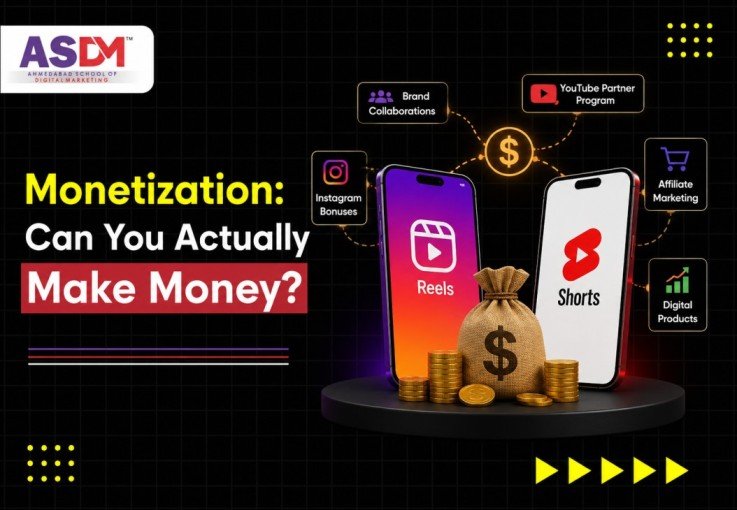
Let’s be direct about this. The monetization landscape is different on each platform.
YouTube Shorts Monetization
You need 1,000 subscribers and either 10 million Shorts views in 90 days or 4,000 hours of long-form watch time to qualify. That’s a high bar. But here’s what gives YouTube an edge: the ecosystem.
How it works:
- You earn a share of ad revenue generated between Shorts
- Eligibility is based on “engaged views” (meaningful watch time), not just total views
- YouTube offers a revenue sharing model through the YouTube Partner Program. Eligible creators earn a portion of the ad revenue generated between Shorts in the Shorts feed.
2026 Reality Check: The YouTube Shorts Fund (direct creator payments) has largely disappeared as a meaningful income source. Real monetization comes from:
- Ad revenue (if you hit YPP requirements)
- Channel memberships
- Shorts feeding traffic to long-form content (where monetization is stronger)
Instagram Reels Monetization
Instagram has phased out its original approach. Instagram has phased out its original Reels Play bonus program and does not currently offer a direct revenue sharing model comparable to YouTube’s. Reels monetization primarily comes through brand partnerships, Instagram Shopping integrations, and driving traffic to external products.
Real Revenue Sources on Instagram:
- Brand partnerships and sponsored content
- Affiliate marketing (driving traffic to products)
- Instagram Shopping (selling directly)
- Using Reels as a funnel to your own products/services
The Real Monetization Story
For direct monetization, neither platform offers particularly fertile ground right now. Instagram’s incentive programs rotate eligibility and scale unevenly. YouTube’s Shorts Fund has largely disappeared as a meaningful income stream.
Where Real Money Comes From: Instagram Reels as a funnel to your products, your affiliate links, and your paid services. YouTube Shorts is a discovery mechanism that feeds traffic into your broader channel and audience.
Production Quality & Content Requirements
Instagram Reels: Higher Polish Expected
Visual polish matters more on Reels than on Shorts. Viewers expect:
- Clean editing
- Consistent color grading
- Text overlays that enhance (not distract)
- Aesthetic alignment with your brand
- Trending audio that fits naturally
This doesn’t mean you need Hollywood-level production, but slapped-together phone footage underperforms.
YouTube Shorts: Value & Hook > Polish
YouTube Shorts reward substance over style. YouTube Shorts: Under 60 seconds for the Shorts feed. Keyword optimization in title and description is more important than on other platforms due to the search discovery component. Thumbnail matters for click-through from search results.
What matters:
- Opening hook (absolutely critical)
- Clear value in the first 2-3 seconds
- Retention throughout (not style)
- Metadata optimization (title, description, thumbnail)
A rough tutorial that delivers real value outperforms a polished video with no substance.
Practical Strategy: Where Should YOU Start?
This is the question that actually matters.
Choose YouTube Shorts If:
- You create educational content (tutorials, how-tos, explanations)
- You want long-term compounding reach
- You’re building a channel ecosystem (feeding traffic to long-form)
- Your audience is searching for solutions (not just scrolling)
- You’re doing news/commentary/explainers
- You want direct platform monetization
Why: YouTube’s algorithm favors watch time and intent-driven discovery. A Short about “how to edit videos” generates views for months. You’re building a searchable library.
Choose Instagram Reels If:
- You’re creating trend-driven content (music, dance, humor, memes)
- You want fast, immediate virality
- Your brand is visual/aesthetic-focused (fashion, beauty, lifestyle)
- You have an existing follower base (even small helps)
- You’re launching a product (need quick spike)
- You want to build community through DM shares
Why: Instagram’s algorithm rewards trend participation and shareability. Peak window is 24-48 hours, so you’re optimizing for immediate impact.
The Real Answer: Do Both (But Prioritize One First)
For most brands and creators in 2026, the answer is not one platform — it is two.
Smart Strategy:
- Pick your primary platform based on your content type
- Master the algorithm there first (6-12 weeks minimum)
- Once you understand what works, repurpose to the secondary platform
- Eventually, you’re cross-posting and adapting based on platform strengths
Multi-Platform Content Distribution:
- Create your best content in your primary format
- Adapt to secondary platform requirements (duration, audio, hooks)
- Optimize each for that platform’s algorithm (don’t just copy-paste)
- Track performance separately (don’t confuse platform performance)
Content Format Best Practices by Platform
Instagram Reels: Format Rules That Work
Optimal Length: Best between 15-30 seconds for highest completion rates, with longer formats (60-90 seconds) working well for tutorials.
Hook Power: Up to 50% of viewers drop off in the first three seconds. Your opening frame needs to stop the scroll.
Audio Strategy: The optimal audio strategy in 2026 is to use tracks that are trending within your niche, not globally. A sound with 50,000 Reels attached in your specific content category is significantly easier to rank on than a sound with 5 million Reels.
Caption & SEO: Every word in your caption should either improve your search discoverability or improve a specific engagement metric. Avoid emoji-only captions and vague CTAs like “like and follow.”
Shareability Design: Build content people want to send to friends. Ask questions. Create “send-worthy” moments. Design for the Send Button: With sends per reach now a top algorithm signal, Reels built to be shared with a friend tend to outperform Reels built only to be liked.
YouTube Shorts: Format Rules That Work
Optimal Length: Under 60 seconds. Shorter generally means higher retention, but length matters less than keeping viewers to the end.
Hook Obsession: Nail the first 2 seconds, keep people watching, post consistently.
Watch Time Target: Target metric: 60% average view duration minimum. 80%+ is elite.
Metadata Matters: Keyword optimisation in title and description is more important than on other platforms due to the search discovery component. Thumbnail matters for click-through from search results.
Pro Tip: Use ChatGPT for SEO to generate optimized titles and descriptions for your YouTube Shorts. Since YouTube’s algorithm prioritizes keyword optimization in metadata, ChatGPT can help you quickly create multiple variations of titles and descriptions that incorporate high-intent keywords while maintaining clarity and click-worthiness.
Value Density: Pack real value into every second. Educational Shorts perform best when they solve a problem or teach something specific in the shortest time possible.
Key Takeaways: Reels vs Shorts at a Glance
Factor | Instagram Reels | YouTube Shorts |
Best For | Trends, viral moments, entertainment | Education, tutorials, evergreen value |
Reach Speed | 24-48 hours peak | Compounding over weeks/months |
Algorithm Priority | Trending audio, shareability, engagement | Watch time, audience retention, satisfaction |
Audience | Young, entertainment-focused, social | Broader, intent-driven, problem-solving |
Production Quality | Higher expectations | Value > polish |
Monetization | Affiliate, brand deals, products | Ad revenue, channel growth |
Follower Dependency | Higher (initial boost) | Lower (discovery-based) |
Content Lifespan | Days to weeks | Months to years |
How to Get Started Right Now
Week 1: Research & Setup
- Analyze 20 top Reels in your niche and 20 top Shorts
- Notice what hooks they use, how long they hold attention
- Set up analytics tracking for both platforms
- Create accounts if you don’t have them
Week 2-3: Content Creation Strategy
- Outline 5-10 content ideas for your chosen primary platform
- Film them (don’t edit perfection—good enough wins)
- Study the specific algorithm requirements for your platform
Week 4+: Launch & Iterate
- Post consistently (schedule matters less than consistency)
- Track which content performs (watch time, engagement, shares)
- Double down on what works, kill what doesn’t
- Add your secondary platform after 4 weeks of mastering one
Need Structured Guidance? If you want to accelerate this learning curve and understand short-form video strategy within the broader context of digital marketing, consider enrolling in our Digital Marketing Course in Surat. Our curriculum covers platform-specific strategies, analytics interpretation, and how to integrate short-form content into your overall marketing funnel.
Conclusion
The question isn’t “Reels or Shorts?” It’s “Which platform serves my audience better?”
TikTok remains the engagement benchmark that both platforms are measured against, but TikTok’s regulatory uncertainty in several markets has pushed a significant number of creators to diversify. If you’re diversifying, you’re making the right call.
Here’s the honest truth: each platform wins at different things.
Instagram Reels wins at viral moments. YouTube Shorts wins at sustainable discovery. Reels reward visual polish. Shorts rewards value delivery. Reels peaks in 48 hours. Shorts compound for months.
Frequently Asked Questions (FAQs)
Can I repurpose the same video for both Reels and Shorts?
Technically yes, but it won’t optimize for either platform’s algorithm. A Reel that works will often underperform as a Short because YouTube rewards different metrics. If you’re creating multiple versions, spend 10-15 minutes adapting each: adjust hooks, pacing, and metadata. The slight optimization lift is worth it.
Which platform is easier for beginners to grow on?
YouTube Shorts is technically easier because it doesn’t require an existing follower base. However, Instagram Reels feels more accessible because the platform is already familiar. Choose based on your content type, not ease—the wrong platform will feel hard regardless.
How often should I post on each platform?
Instagram Reels benefit from consistency (3-4 per week minimum to stay in rotation). YouTube Shorts reward quality over frequency, but consistency still matters (2-3 per week is solid). Don’t sacrifice quality for posting schedules—one great Short outperforms three mediocre ones.
What’s the difference between views and engaged views on YouTube Shorts?
Views: Every time the Short starts or loops. Engaged Views: When the viewer interacts meaningfully (watches beyond a few seconds, likes, comments, etc.) Only Engaged Views count toward critical metrics such as YouTube Partner Program (YPP) eligibility and revenue payouts.
How long before I see results on each platform?
Instagram Reels: 1-2 weeks to identify what’s working, 4-6 weeks to see consistent patterns. YouTube Shorts: 2-3 weeks for algorithm to test content, but 8-12 weeks to see breakthrough performance. Be patient on YouTube—the algorithm needs time.