Artificial intelligence is no longer just a tool that follows commands. In 2026, marketers are witnessing a major shift from AI assistants to autonomous AI systems capable of planning, analyzing, and executing tasks with minimal human intervention. This evolution is known as agentic AI in marketing, and it is rapidly transforming how businesses approach growth, customer engagement, and campaign management.
From content creation and SEO to advertising and customer journey optimization, agentic AI is helping marketers achieve better results while reducing repetitive work. As organizations increasingly adopt AI-driven technologies, marketing professionals are asking an important question: How will agentic AI impact digital marketing jobs in the future?
In this guide, you’ll learn what agentic AI is, how it differs from traditional AI, and the seven powerful ways it is reshaping the digital marketing industry in 2026.
What is Agentic AI in Marketing?
At its core, agentic AI in marketing combines artificial intelligence, machine learning, automation, and decision-making capabilities into a single system.
Traditional AI typically waits for instructions. Agentic AI proactively identifies opportunities, solves problems, and completes tasks based on predefined goals.
Simple Example
Imagine you launch a Google Ads campaign.
A traditional AI tool may suggest keyword improvements.
An agentic AI system can:
- Analyze campaign performance
- Pause underperforming ads
- Increase budgets on winning campaigns
- Create new ad variations
- Generate performance reports
All without requiring continuous manual input.
This ability to act independently makes agentic AI one of the most important developments in ai digital marketing today.
Agentic AI vs Traditional AI in Marketing
Feature | Traditional AI | Agentic AI |
Decision Making | Requires human approval | Makes decisions autonomously |
Automation Level | Partial automation | End-to-end automation |
Human Involvement | High | Moderate to low |
Campaign Management | Suggests actions | Executes actions |
Optimization | Rule-based | Adaptive learning |
Learning Capability | Limited | Continuous improvement |
The biggest difference is that agentic AI doesn’t just assist marketers—it actively contributes to achieving marketing objectives.
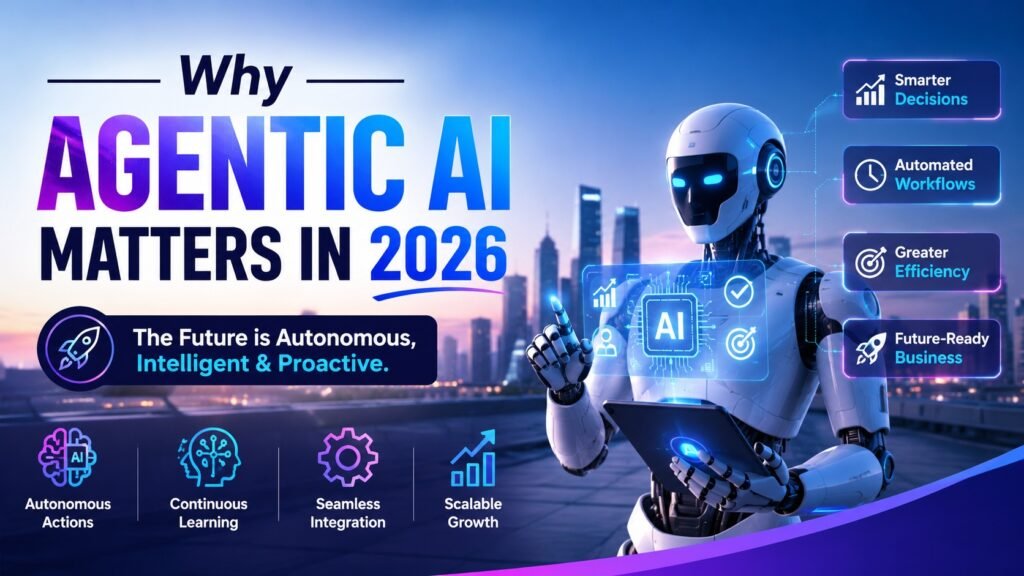
Why Agentic AI Matters in 2026
Marketing has become increasingly complex.
Businesses now manage:
- Multiple advertising channels
- Diverse customer segments
- Massive amounts of marketing data
- Personalized customer experiences
- Real-time campaign optimization
Managing all these tasks manually is becoming nearly impossible.
This is where AI in marketing is evolving. Agentic AI helps businesses process data faster, automate decisions, and improve campaign efficiency while allowing marketers to focus on strategy and creativity.
Industry experts view autonomous AI agents as a major driver of the future of marketing because they enable faster execution and smarter decision-making.
7 Powerful Ways Agentic AI is Changing Digital Jobs in 2026
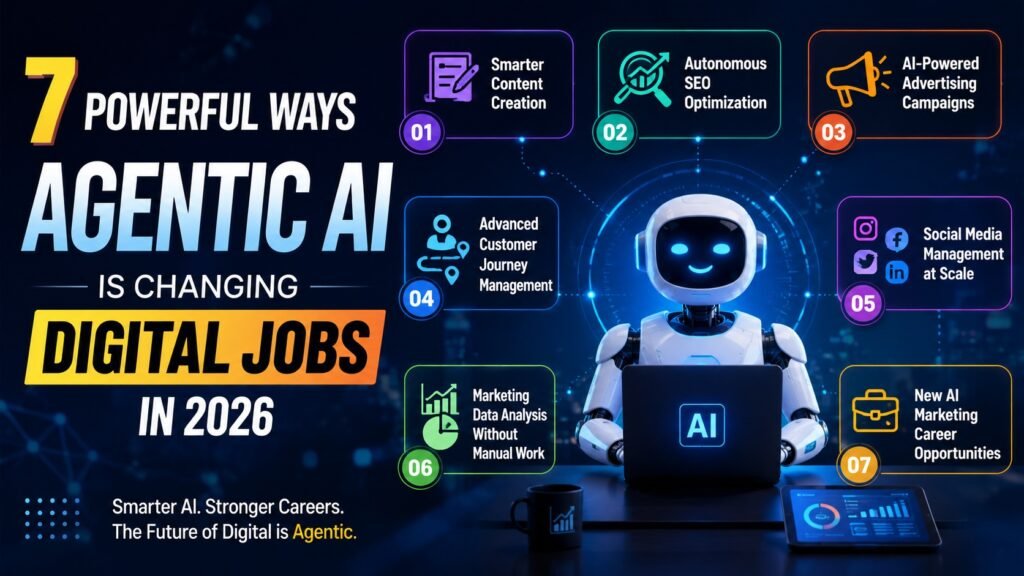
1. Smarter Content Creation
Content remains the foundation of digital marketing.
Agentic AI is transforming content production by:
- Identifying trending topics
- Conducting keyword research
- Creating content briefs
- Generating personalized content
- Optimizing content performance
Instead of spending hours planning content calendars, marketers can rely on AI content creation systems to handle repetitive tasks while focusing on quality and brand messaging.
This is one of the most visible applications of AI in marketing today.
2. Autonomous SEO Optimization
SEO is becoming more data-driven than ever.
Agentic AI systems can continuously monitor:
- Ranking changes
- Competitor activity
- Technical SEO issues
- Search intent shifts
- Content opportunities
These systems can recommend updates and even implement improvements automatically.
For SEO professionals, this means spending less time on manual audits and more time developing growth strategies.
Many students pursuing the Best Digital Marketing Course in Surat are already learning how AI-powered SEO automation will influence future marketing roles.
3. AI-Powered Advertising Campaigns
One of the most exciting developments is the use of AI for advertising.
Modern AI systems can:
- Optimize bids in real time
- Allocate budgets automatically
- Identify high-performing audiences
- Generate ad creatives
- Improve conversion rates
Instead of manually adjusting campaigns daily, marketers can allow agentic AI to monitor and optimize performance continuously.
As competition increases across digital channels, businesses using AI for advertising gain a significant advantage in efficiency and ROI.
4. Advanced Customer Journey Management
Today’s customers expect personalized experiences.
Agentic AI enhances the entire AI customer journey by:
- Tracking user behavior
- Identifying intent signals
- Delivering personalized recommendations
- Automating follow-up communication
- Predicting future actions
These capabilities help brands build stronger relationships while improving customer satisfaction and retention.
This is another reason why agentic AI in marketing is becoming a priority for forward-thinking organizations.
5. Social Media Management at Scale
Managing multiple social media platforms can be time-consuming.
Agentic AI can help marketers:
- Schedule content automatically
- Analyze engagement trends
- Monitor competitor activity
- Identify viral opportunities
- Generate performance insights
If you are still figuring out which platforms deserve your energy, start by understanding the proven social media marketing strategies that actually drive business growth — then let AI handle the execution at scale.
With social media becoming more competitive, autonomous AI agents help businesses maintain consistency without increasing workload.
And when it comes to short-form video — one of the highest-engagement formats right now — AI tools can also help you decide where to publish. Our detailed breakdown of Instagram Reels vs YouTube Shorts for organic reach and growth in 2026 can help you make that call faster.
For agencies managing multiple clients, this level of automation can dramatically improve productivity.
6. Marketing Data Analysis Without Manual Work
Marketing teams generate enormous amounts of data every day.
Unfortunately, much of that data goes unused.
Agentic AI uses predictive analytics to:
- Identify trends
- Forecast outcomes
- Generate reports
- Detect performance issues
- Recommend improvements
Instead of spending hours creating spreadsheets, marketers receive actionable insights instantly.
This advancement is changing how businesses use AI digital marketing strategies to make informed decisions.
7. New AI Marketing Career Opportunities
Despite concerns about automation, agentic AI is creating new career paths.
Emerging roles include:
- AI Marketing Strategist
- Prompt Engineer
- AI Campaign Manager
- Marketing Automation Specialist
- AI Operations Manager
As businesses adopt advanced AI marketing tools, professionals who understand both marketing and AI will be in high demand.
Students exploring career opportunities should focus on developing strategic thinking, creativity, and AI management skills.
Will Agentic AI Replace Digital Marketers?
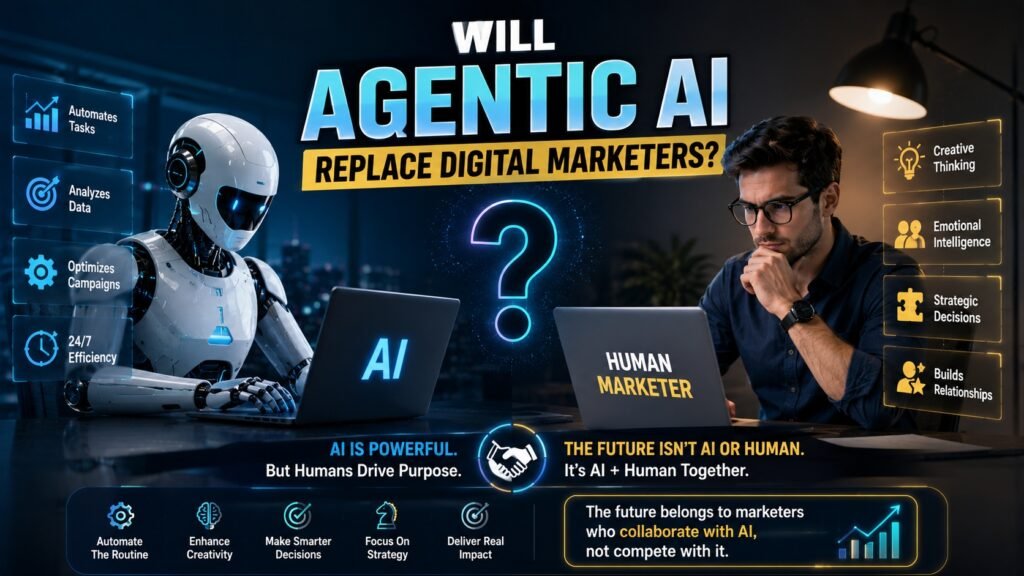
The short answer is no.
Agentic AI will change jobs, but it is unlikely to replace skilled marketers entirely.
Human marketers still provide:
- Creativity
- Brand storytelling
- Emotional intelligence
- Strategic leadership
- Relationship building
AI excels at execution and analysis, while humans excel at innovation and decision-making.
If you’re interested in exploring this topic further, read our detailed guide on Can AI Replace Digital Marketers?:
The future belongs to marketers who learn how to collaborate with AI rather than compete against it.
Best AI Tools Marketers Should Explore in 2026
When evaluating the best AI for marketing, consider tools across different categories.
SEO Tools
- ChatGPT
- Surfer SEO
- Semrush AI Features
Content Tools
- Jasper
- Copy.ai
- Claude
Advertising Tools
- Google Ads AI
- Meta Advantage+
- Performance Max
Analytics Tools
- GA4 Insights
- Tableau AI
- Looker Studio AI
Automation Tools
- Zapier AI
- HubSpot AI
- Salesforce Einstein
The best AI for marketing depends on business goals, team size, and marketing objectives.
Challenges and Risks of Agentic AI in Marketing
While the benefits are significant, organizations should also consider potential risks.
Data Privacy
AI systems rely heavily on customer data, making compliance essential.
AI Bias
Poor-quality data can lead to biased outcomes and inaccurate decisions.
Human Oversight
Autonomous systems still require monitoring to ensure alignment with business goals.
Ethical Concerns
Transparency and responsible AI use are becoming increasingly important.
Accuracy Limitations
Even advanced AI systems can make mistakes, requiring human review.
Successful organizations use AI as a partner rather than a replacement for human expertise.
How Businesses Can Start Using Agentic AI Today
Follow this simple framework:
Step 1: Identify Repetitive Tasks
Find tasks that consume significant time and resources.
Step 2: Select Suitable AI Tools
Choose AI marketing tools that align with your goals.
Step 3: Train Your Team
Ensure employees understand how to use and manage AI systems effectively.
Step 4: Measure Results
Track productivity, efficiency, and campaign performance.
Step 5: Scale Automation
Expand successful AI initiatives across departments.
Starting small often leads to the best long-term results.
Future of Agentic AI in Marketing (2026–2030)
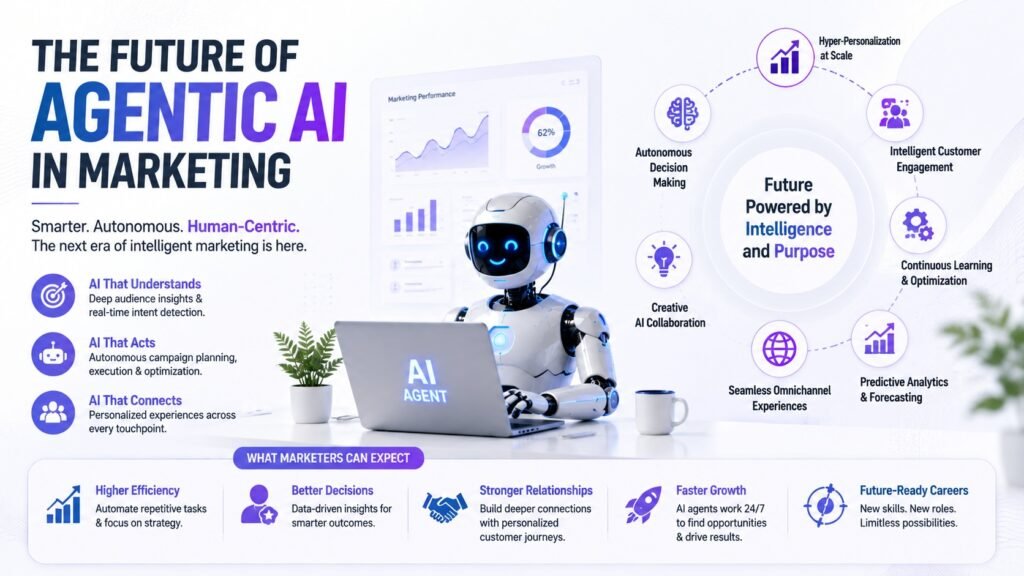
The next few years will bring major changes to marketing.
We can expect:
- Autonomous marketing teams
- Smarter AI-driven campaigns
- Hyper-personalized customer experiences
- Real-time predictive decision-making
- Fully integrated marketing workflows
As agentic AI continues to evolve, businesses that embrace innovation early will gain a competitive advantage.
The future of marketing will be defined by collaboration between humans and intelligent systems.
Conclusion
The rise of agentic AI in marketing represents one of the biggest shifts in modern digital marketing. Unlike traditional automation tools, agentic AI can analyze, decide, and act independently, helping businesses improve efficiency, personalization, and campaign performance.
From SEO and content creation to AI for advertising, customer experience, and predictive analytics, autonomous AI agents are transforming how marketers work. Rather than replacing professionals, these technologies are creating new opportunities and redefining digital marketing jobs for the future.
Ready to stay ahead in the future of digital marketing? Explore the latest AI, SEO, and digital marketing insights at asdm institute and start building the skills needed for the next generation of marketing success.
Frequently Asked Questions
What is Agentic AI in Marketing?
Agentic AI in marketing refers to autonomous AI systems that can make decisions, execute marketing tasks, optimize campaigns, and achieve business goals with minimal human intervention.
How does Agentic AI differ from traditional AI?
Traditional AI provides recommendations, while agentic AI can independently take action and optimize outcomes based on predefined objectives.
Is Agentic AI replacing marketers?
No. Agentic AI automates repetitive tasks but still requires human creativity, leadership, and strategic thinking.
What are the benefits of AI in marketing?
Benefits include improved efficiency, better personalization, faster decision-making, enhanced customer experiences, and optimized marketing performance.
Which is the best AI for marketing?
The best AI for marketing depends on your goals. Popular options include ChatGPT, HubSpot AI, Salesforce Einstein, Jasper, and Google Ads AI.