
Introduction
If you’re new to digital marketing or running a business, you’ve probably heard the term what is lead generation many times—but it often feels confusing or overly technical.
Let’s simplify it.
Lead generation is not just a marketing buzzword. It’s the foundation of how businesses find customers, grow revenue, and scale consistently. Whether you’re a freelancer, student, or business owner, understanding this concept can completely change how you approach marketing.
Imagine opening a shop but no one walks in. That’s exactly what happens when you don’t generate leads.
In this guide, you’ll learn everything—from basic concepts to real strategies you can apply immediately. Just practical, experience-based insights.
If you’re just starting out, you might also want to explore How to Start Digital Marketing After 12th, which gives a clear roadmap for beginners.
By the end, you’ll not only understand lead generation—you’ll know how to actually use it.
What is Lead Generation?
Let’s answer the most important question clearly:
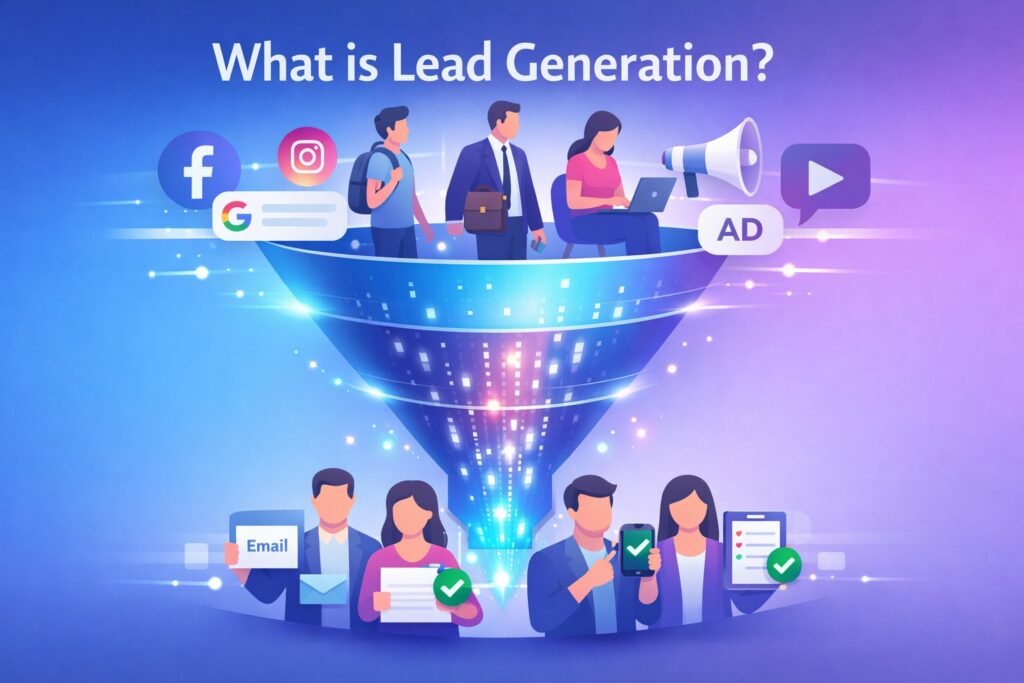
Lead generation is the process of attracting people who are interested in your product or service and collecting their contact information so you can convert them into customers.
A “lead” is simply a potential customer.
Simple Example
Let’s say you run a fitness coaching business:
- Someone visits your website
- Downloads your free diet plan
- Enters their email
That person becomes a lead
Now you can:
- Send emails
- Offer coaching plans
- Convert them into a paying client
In One Line
Lead generation = Turning strangers into interested prospects
Why Lead Generation is Important for Business
Without leads, there are no sales.
It’s that simple.
1. Consistent Customer Flow
Lead generation ensures your business doesn’t rely on random customers. You build a steady pipeline.
2. Better Sales Conversion
When someone already shows interest, selling becomes easier.
3. Cost-Effective Growth
Compared to traditional marketing, digital lead generation is measurable and scalable.
4. Builds Relationships
You don’t just sell—you nurture trust over time.
Real Insight
Businesses that focus on lead generation:
- Spend less on advertising
- Convert more customers
- Grow faster
If you’re serious about building a long-term digital marketing career, learning this skill is non-negotiable.
If you’re planning to build long-term skills, enrolling in a Digital Marketing Course in Ahmedabad can help you understand how lead generation works in real business scenarios.
Types of Lead Generation
Understanding the types of lead generation helps you choose the right approach for your goals.
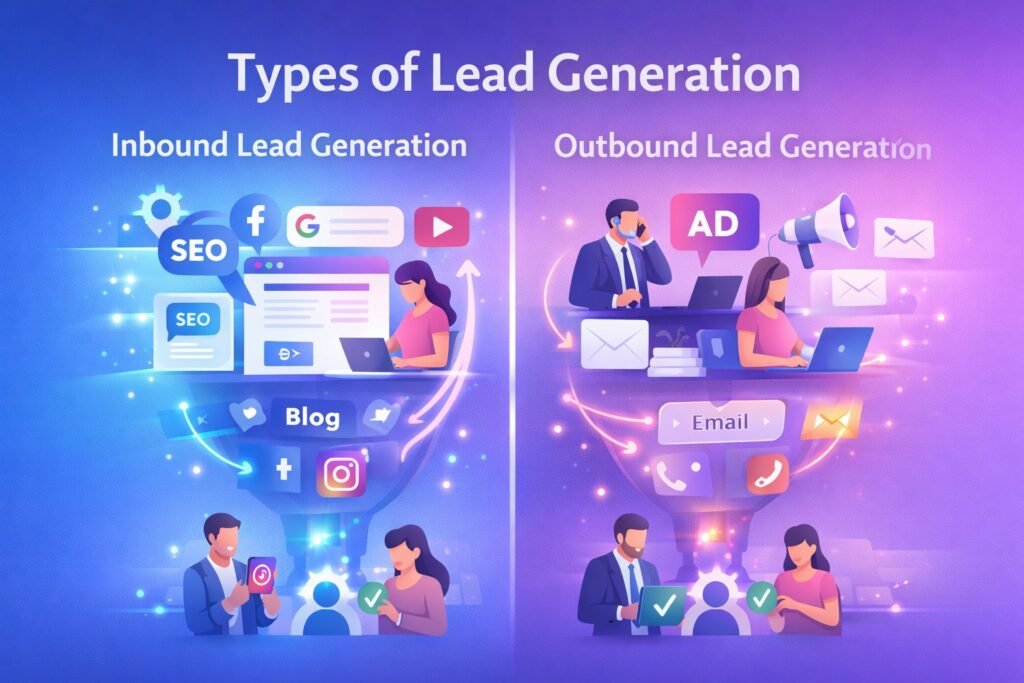
1. Inbound Lead Generation
This method attracts people naturally.
Examples:
- SEO blogs
- YouTube videos
- Social media content
- Free resources
People find you → show interest → become leads
2. Outbound Lead Generation
Here, you reach out directly to potential customers.
Examples:
- Cold emails
- Paid ads
- Direct messaging
- Telemarketing
You approach people → generate interest → capture leads
Key Difference
Inbound | Outbound |
Pull strategy | Push strategy |
Long-term | Immediate results |
Lower cost | Higher cost |
Best approach? Use both strategically.
B2B Lead Generation vs B2C Lead Generation
Understanding the difference between B2B lead generation and B2C lead generation is critical.
B2B Lead Generation
Business-to-business selling.
Example:
A marketing agency getting clients from companies.
Key Traits:
- Longer decision process
- High-value deals
- Relationship-based
B2C Lead Generation
Business-to-consumer selling.
Example:
An online clothing store selling to individuals.
Key Traits:
- Faster decisions
- Emotional buying
- Larger audience
Quick Comparison
Factor | B2B | B2C |
Audience | Businesses | Individuals |
Decision Time | Longer | Short |
Strategy | Educational | Emotional |
Lead Generation Strategies That Work in 2026
Let’s talk about practical lead generation strategies that actually work.
1. SEO (Search Engine Optimization)
Create helpful content that ranks on Google.
Example:
A blog on “best weight loss tips” brings traffic and leads.
2. Social Media Marketing
Platforms like Instagram and LinkedIn are powerful.
Example:
- Reels with tips
- CTA like “DM for free guide”
3. Paid Advertising
Fastest way to generate leads.
Platforms:
- Google Ads
- Facebook Ads
4. Email Marketing
Build an email list and nurture leads.
Example:
- Offer free ebook
- Send weekly emails
5. Content Marketing
Create valuable content that solves problems.
Formats:
- Blogs
- Videos
- Infographics
Many beginners learn these strategies practically through a Digital Marketing Course in Surat, where real campaigns and lead funnels are taught step-by-step.
Pro Tip
Don’t rely on one strategy.
Combine:
- SEO + Ads
- Content + Email
That’s how real growth happens.
How Lead Generation Works (Step-by-Step)
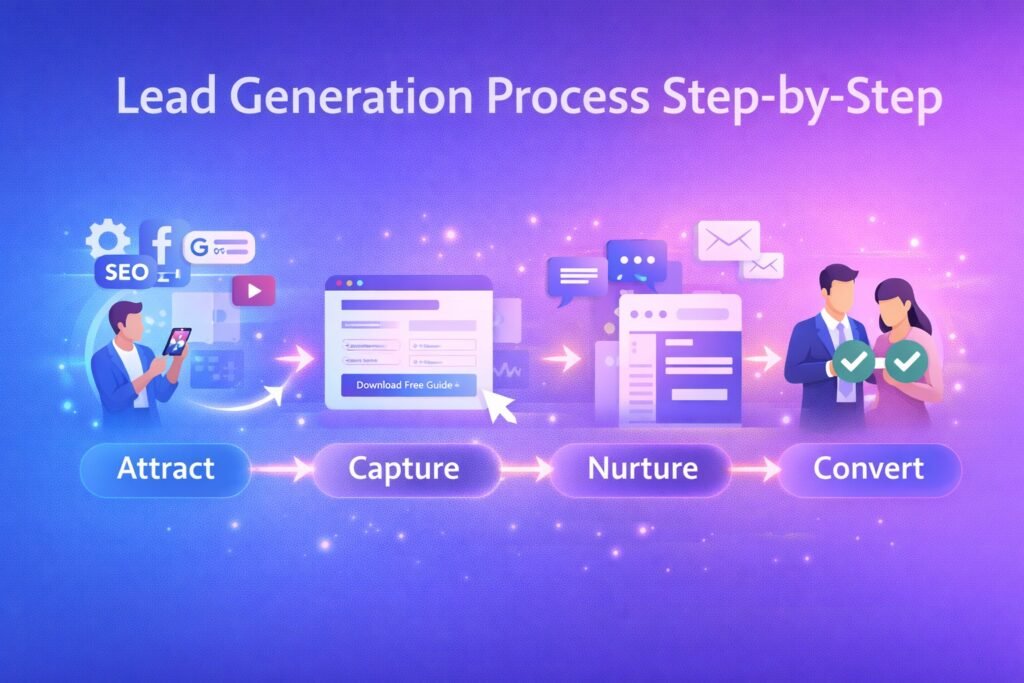
Let’s break it into a simple process.
Step 1: Attract Audience
Use:
- SEO
- Social media
- Ads
Goal: Bring traffic
Step 2: Capture Leads
Use:
- Forms
- Landing pages
- Lead magnets
Goal: Collect contact info
Step 3: Nurture Leads
Use:
- Emails
- Retargeting ads
Goal: Build trust
Step 4: Convert into Customers
Offer:
- Discounts
- Consultation
- Products
Goal: Close the sale
Real Example
A digital marketer:
- Writes SEO blog
- Offers free checklist
- Collects emails
- Sends course offer
That’s a full lead generation system.
Best Lead Generation Examples
Here are practical examples you can apply immediately.
1. Website Forms
Simple contact forms to capture user data.
2. Landing Pages
Focused pages designed for conversions.
3. Free Ebook Downloads
Offer value in exchange for email.
4. Webinars
Live sessions that build trust and collect leads.
5. Ads with Lead Forms
Direct lead capture through platforms like Facebook.
Pro Insight
The best lead magnets:
- Solve a specific problem
- Are quick to consume
- Provide real value
Common Lead Generation Mistakes to Avoid
Even good strategies fail due to basic mistakes.
1. No Target Audience
Trying to reach everyone = reaching no one.
2. Weak Landing Pages
Poor design and unclear message reduce conversions.
3. No Follow-Up
Most leads don’t convert instantly.
4. Ignoring Analytics
You can’t improve what you don’t measure.
5. Overcomplicating the Process
Keep it simple:
- Clear offer
- Easy form
- Strong CTA
Future of Lead Generation
Lead generation is evolving fast.
1. AI Automation
Tools automate:
- Emails
- Chat responses
- Lead scoring
2. Personalization
Users expect customized experiences.
3. Chatbots
Instant responses = higher conversion.
4. Data-Driven Marketing
Decisions based on analytics, not guesswork.
What This Means for You
- Learn tools early
- Focus on user experience
- Adapt quickly
Conclusion
Now you clearly understand what is lead generation and how it works in practical terms.
Let’s recap:
- It’s about attracting and capturing potential customers
- It helps businesses grow consistently
- It requires the right strategy and execution
If you’re serious about digital growth—whether as a student, freelancer, or business owner—start implementing these techniques today.
Because at the end of the day:
No leads = No business
FAQ Section
What is lead generation in digital marketing?
Lead generation in digital marketing is the process of attracting potential customers online and collecting their contact details, such as email or phone number. Businesses use websites, ads, and content to capture interest and turn visitors into leads, who can later be nurtured and converted into paying customers through targeted marketing efforts.
What are types of lead generation?
There are two main types of lead generation: inbound and outbound. Inbound lead generation focuses on attracting users through content, SEO, and social media, while outbound lead generation involves reaching out directly using ads, cold emails, or calls. Both methods help businesses capture leads, but inbound is more organic and long-term.
What is B2B lead generation?
B2B lead generation is the process of attracting and converting businesses into potential clients. It typically involves strategies like LinkedIn marketing, email outreach, webinars, and content marketing. Since business decisions take time, B2B leads require nurturing through trust-building, detailed information, and consistent communication before converting into paying customers.
What is B2C lead generation?
B2C lead generation focuses on attracting individual consumers who are likely to buy a product or service. It uses strategies like social media marketing, influencer campaigns, and paid ads. Unlike B2B, the buying decision is quicker and often emotional, making strong visuals, offers, and user experience critical for conversions.
How to generate leads for business?
To generate leads for a business, start by identifying your target audience and creating valuable content that solves their problems. Use SEO, social media, and paid advertising to drive traffic. Capture leads through forms, landing pages, or offers like free resources, then nurture them through email or follow-ups to convert into customers.
Which strategy is best for lead generation?
The best lead generation strategy is a combination of SEO, content marketing, and paid advertising. SEO brings long-term organic traffic, content builds trust, and ads generate quick leads. When used together, they create a balanced system that consistently attracts, captures, and converts potential customers into loyal clients.
Is lead generation important for small businesses?
Yes, lead generation is essential for small businesses because it helps attract potential customers consistently without relying only on referrals. It allows businesses to build a steady pipeline of prospects, improve sales opportunities, and grow sustainably. With digital tools, even small businesses can compete effectively and scale their marketing efforts.
Can beginners learn lead generation?
Yes, beginners can easily learn lead generation with the right guidance and practice. By understanding basic concepts like audience targeting, content creation, and lead capture methods, anyone can start generating leads. Many online resources and courses provide step-by-step learning, making it accessible even for non-technical users and students.
What is a lead in marketing?
A lead in marketing is a person or business that has shown interest in your product or service by taking an action, such as filling out a form, subscribing to a newsletter, or downloading a resource. Leads are not customers yet, but they have potential to convert through proper follow-up and nurturing.
What is a qualified lead?
A qualified lead is a potential customer who is more likely to make a purchase based on their interest, behavior, or fit with your business. It is usually categorized into Marketing Qualified Leads (MQL) and Sales Qualified Leads (SQL), helping businesses focus their efforts on prospects with higher conversion chances.