
Introduction
If you’re just starting out, SEO can feel confusing—too many terms, tools, and “expert advice” that often contradict each other. Most beginners struggle with one simple question: Where do I even start?
The truth is, SEO isn’t about tricks or shortcuts. It’s about understanding how search engines work and helping users find exactly what they’re looking for. That’s why learning the right seo tips for beginners can save you months of trial and error.
In 2026, SEO is more competitive—but also more opportunity-driven. Google now prioritizes helpful content, user experience, and real expertise over outdated tactics.
This guide will walk you through practical, beginner-friendly SEO strategies you can start using immediately—no technical background required.
What is SEO and Why It Matters in 2026
SEO (Search Engine Optimization) is the process of improving your website so it appears higher in search engine results like Google.
If you’ve ever wondered how to do search engine optimization, here’s the simple idea:
Make your content useful, relevant, and easy for search engines to understand.
Why SEO matters more than ever:
- Organic traffic is free and sustainable
- Google prioritizes helpful, human-first content
- AI search (ChatGPT, Gemini) pulls from well-structured content
- Businesses rely heavily on search visibility
In short, SEO is no longer optional—it’s essential.
How to Do SEO (Beginner Overview)
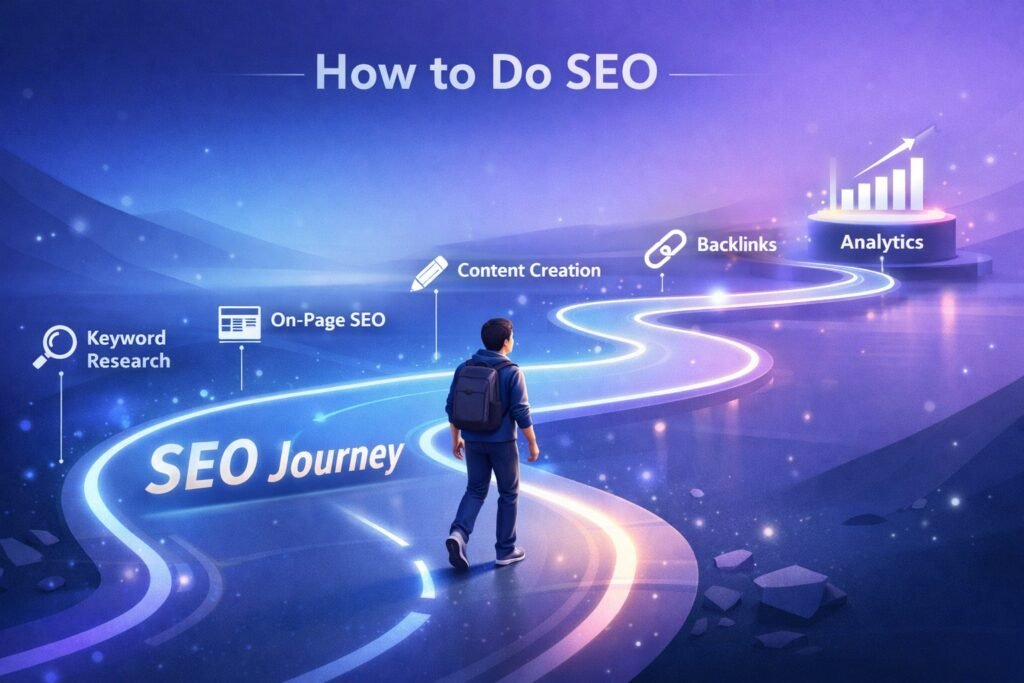
If you’re wondering how to do SEO, think of it as a 3-step process:
Step 1: Find the Right Keywords
Understand what people are searching for.
Step 2: Create Valuable Content
Answer their questions better than others.
Step 3: Optimize & Improve
Make your website fast, mobile-friendly, and well-structured.
That’s it. Everything else builds on these fundamentals.
10 SEO Tips for Beginners to Rank in 2026

Tip 1 – Keyword Research Basics
Explanation:
Keywords are what people type into Google. Choosing the right ones is the foundation of SEO.
Example:
Instead of “SEO”, use “seo tips for beginners” (more specific, easier to rank).
Action:
- Use tools like Google Suggest or Ubersuggest
- Focus on long-tail keywords
Tip 2 – Focus on Search Intent
Explanation:
Google ranks content that matches user intent, not just keywords.
Example:
If someone searches “how to do seo”, they want a guide—not a sales page.
Action:
- Analyze top-ranking pages
- Match your content format (guide, list, tutorial)
Tip 3 – Optimize Title & Meta Tags
Explanation:
Your title is the first thing users see. It impacts both ranking and clicks.
Example:
Bad: “SEO Guide”
Good: “10 SEO Tips for Beginners to Rank in 2026”
Action:
- Include your main keyword
- Keep it clear and compelling
Tip 4 – Create High-Quality Content
Explanation:
Content is the biggest ranking factor.
Example:
A detailed guide with examples will always outperform a short article.
Action:
- Write for humans, not just search engines
- Add examples, steps, and clarity
Tip 5 – Use Internal Linking
Explanation:
Linking to your own pages helps Google understand your site.
Example:
Link to related topics like Digital Marketing Career or Digital Marketing salary in Ahmedabad within your content.
Action:
- Add 2–3 relevant internal links
- Use descriptive anchor text
Tip 6 – Improve Website Speed
Explanation:
Slow websites rank lower and lose users.
Example:
A site taking 5 seconds to load will have higher bounce rates.
Action:
- Compress images
- Use fast hosting
- Minimize unnecessary scripts
Tip 7 – Mobile Optimization
Explanation:
Most users browse on mobile. Google uses mobile-first indexing.
Action:
- Use responsive design
- Test on different devices
Tip 8 – Build Backlinks
Explanation:
Backlinks are links from other websites. They act as trust signals.
Example:
A blog linking to your article increases authority.
Action:
- Guest posting
- Share content on social platforms
Tip 9 – Use SEO Tools
Explanation:
Tools help you track and improve performance.
Beginner Tools:
- Google Search Console
- Google Analytics
- Ubersuggest
Action:
- Monitor traffic
- Identify ranking keywords
Tip 10 – Track & Improve Performance
Explanation:
SEO is not one-time—it’s continuous improvement.
Action:
- Update old content
- Improve underperforming pages
Best SEO Strategies for Beginners
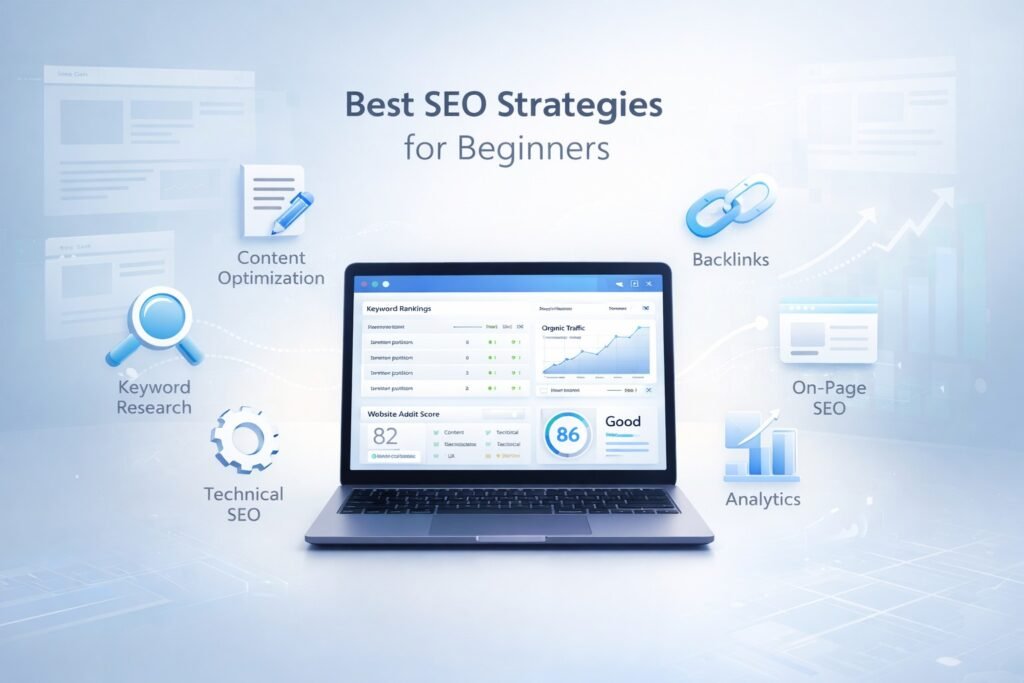
To grow faster, focus on these proven seo strategies:
On-Page SEO
- Optimize titles, headings, and content
- Use keywords naturally
Off-Page SEO
- Build backlinks
- Increase brand mentions
Technical SEO (Basic)
- Fast loading speed
- Mobile-friendly design
- Clean website structure
Common SEO Mistakes Beginners Should Avoid
Avoid these mistakes:
- Keyword stuffing
- Ignoring mobile optimization
- Writing low-quality content
- Not tracking performance
These can slow down your growth significantly.
How Long Does SEO Take to Work?
SEO is a long-term game.
Typical timeline:
- 1–3 months → Initial improvements
- 3–6 months → Traffic growth
- 6–12 months → Strong rankings
Consistency matters more than speed.
Future of SEO in 2026
SEO is evolving fast. Here’s what matters:
AI SEO
Content must be structured for AI search engines
Voice Search
More conversational queries
User Experience
Engagement, speed, and usability matter more than ever
Conclusion
Learning and applying the right SEO tips for beginners can completely transform how your website grows over time. SEO is not about quick tricks or shortcuts—it’s about understanding what users are searching for and delivering real value through your content. When you focus on solving problems, answering questions clearly, and creating helpful experiences, search engines naturally reward your efforts with better visibility.
The key is to start small and stay consistent. You don’t need advanced technical skills in the beginning. Simple actions like choosing the right keywords, optimizing your content, improving website speed, and building basic backlinks can make a noticeable difference. Over time, these small improvements compound into strong, long-term results.
SEO also requires patience. Unlike paid ads, it doesn’t deliver instant results, but it builds sustainable growth that continues even without ongoing spending. That’s why businesses and individuals who invest in SEO early often see the biggest rewards later.
If you want to learn faster and gain practical experience, enrolling in a Digital Marketing Course in Ahmedabad or a Digital Marketing Course in Surat can help you understand real-world strategies and apply them effectively. With the right guidance and consistent effort, SEO can open new opportunities for your career, business, and online presence.
FAQ
What is SEO for beginners?
SEO (Search Engine Optimization) is the process of improving a website’s visibility on search engines like Google to attract organic (free) traffic. For beginners, it involves understanding how search engines work, using the right keywords, creating helpful content, and optimizing website pages. Learning SEO helps individuals and businesses grow online without relying heavily on paid ads.
How to start SEO step by step?
To start SEO, begin with keyword research to find what people are searching for. Then create high-quality, useful content around those keywords. Optimize your titles, meta descriptions, and headings. Improve website speed and mobile usability. Finally, build backlinks and track performance using tools like Google Analytics and Search Console to continuously improve your results.
Is SEO easy to learn?
Yes, SEO is beginner-friendly if you approach it step by step. While advanced SEO can be technical, the basics—like keyword research, content creation, and on-page optimization—are easy to understand. With consistent practice, real-world experimentation, and proper guidance, anyone can learn SEO and start ranking their content on Google over time.
How long does SEO take?
SEO is a long-term strategy, and results usually take 3 to 6 months to become noticeable. The timeline depends on competition, keyword difficulty, content quality, and consistency. New websites may take longer, while established sites can see quicker improvements. Patience and continuous optimization are key to achieving sustainable SEO growth.
What are the best SEO strategies?
The most effective SEO strategies include creating high-quality content, optimizing on-page elements like titles and headings, and building strong backlinks. Additionally, focusing on user experience, mobile optimization, and page speed improves rankings. Consistently updating content and targeting the right keywords also plays a major role in long-term SEO success.
Can I do SEO without technical knowledge?
Yes, you can start SEO without technical knowledge. Basic SEO tasks like keyword research, content writing, and on-page optimization do not require coding skills. Many tools and platforms make SEO easier for beginners. However, learning some technical aspects later—like website structure and speed optimization—can further improve your results.
What is the most important SEO factor?
High-quality, helpful content is the most important SEO factor. Search engines prioritize content that solves user problems, answers questions clearly, and provides value. Along with content, proper keyword usage, user experience, and backlinks also matter. But without useful and relevant content, it is difficult to achieve strong and lasting rankings on Google.
What are the first SEO tips for beginners?
The first SEO tips for beginners include starting with keyword research, focusing on search intent, and creating helpful, user-focused content. Optimize titles, meta descriptions, and headings properly. Ensure your website is mobile-friendly and fast. Beginners should also learn basic on-page SEO and use tools like Google Search Console to track performance and improve rankings over time.
What is the difference between on-page and off-page SEO?
On-page SEO refers to optimizing elements on your website, such as content, keywords, headings, and meta tags. Off-page SEO involves activities outside your website, mainly building backlinks and improving domain authority. Both are important—on-page SEO helps search engines understand your content, while off-page SEO builds trust and credibility for better rankings.
How do I rank my website on Google fast?
To rank faster on Google, focus on low-competition keywords, create high-quality content, and optimize your pages properly. Improve website speed, ensure mobile responsiveness, and build a few quality backlinks. While SEO takes time, targeting the right keywords and consistently publishing valuable content can help you see quicker improvements in rankings
Which SEO tool is best for beginners?
The best SEO tools for beginners are Google Search Console, Google Analytics, and keyword research tools like Ubersuggest or Ahrefs (free version). These tools help you understand website performance, find keywords, and identify issues. Beginners should start with simple tools that provide clear insights and gradually move to advanced tools as their SEO knowledge grows.