

Attend a Free Demo Session in Surat
#1 Digital Marketing Institute in Surat
Digital Marketing Course in Surat with Advanced AI Training
India's Most Trusted Digital Marketing Institute in Surat - ASDM
Looking for the best Digital Marketing Course in Surat where you learn practical skills, work on real projects, and become job-ready?
Surat is growing fast as more businesses are moving online. From startups to local brands, everyone needs digital marketing to grow. This has created strong demand for skilled professionals.
At ASDM Institute in Surat, you do not just sit and learn. You work on live campaigns, use AI tools, and gain hands-on experience that prepares you for real jobs.
If you are serious about building your career, this is the right place to start.
4.9/5Google Rating from 1,400+ Reviews (as of 5 August 2026)
100%Placement Assistance
220,000+Students & Participants Trained Since 2012
15+Internationally Recognized Certifications
#1 Digital Marketing Institute in Surat
Digital Marketing Course in Surat with Advanced AI Training
India's Most Trusted Digital Marketing Institute in Surat - ASDM
Looking for the best Digital Marketing Course in Surat where you learn practical skills, work on real projects, and become job-ready?
Surat is growing fast as more businesses are moving online. From startups to local brands, everyone needs digital marketing to grow. This has created strong demand for skilled professionals.
At ASDM Institute in Surat, you do not just sit and learn. You work on live campaigns, use AI tools, and gain hands-on experience that prepares you for real jobs.
If you are serious about building your career, this is the right place to start.
Attend a Free Demo Session in Surat
4.9/5Google Rating from 1,400+ Reviews (as of 5 August 2026)
100%Placement Assistance
220,000+Students & Participants Trained Since 2012
15+Internationally Recognized Certifications
About ASDM Digital Marketing Course in Surat
A premium learning experience designed for students, professionals, and business owners who want real skills, real exposure, and real career growth in digital marketing.
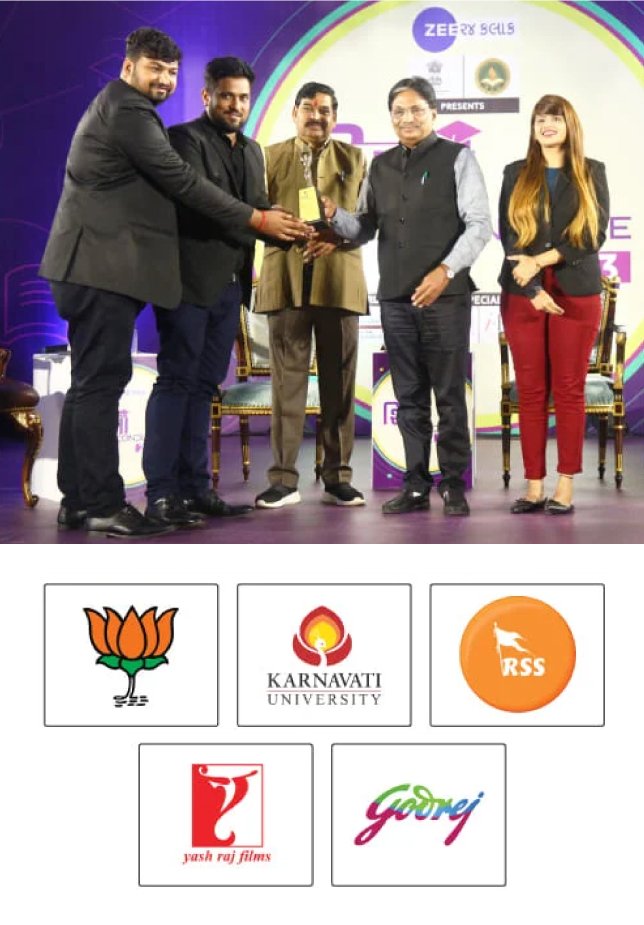
Digital marketing course in Surat is the perfect choice for anyone looking to build a high-growth career in today's digital-first world, and ASDM Institute stands out as a trusted name for quality training, Placement Assistance & freelancing support. Our Digital marketing Course in Surat is designed and delivered by seasoned professionals and industry experts who bring real-world experience into the classroom.
As a leading Digital marketing Institute in Surat, we provide in-depth training across SEO, Google Ads (PPC), social media marketing, content strategy, and performance marketing. This makes ASDM's course a complete solution for beginners, job seekers, and professionals who want industry-ready skills.
At ASDM, we focus on practical learning through live projects, real-time case studies, and interactive sessions. This hands-on approach ensures students not only understand concepts but can confidently apply them in real-world scenarios.
Choosing ASDM means becoming part of a powerful ecosystem of learners, mentors, and experts. This network helps students gain exposure, build connections, and unlock better career opportunities in digital marketing.
100%Practical Learning
AIIntegrated Training
CareerFocused Support
SURAT'S DIGITAL OPPORTUNITY
Why Digital Marketing is a High-Growth Career in Surat
Digital marketing is one of the fastest-growing career options today, especially in a business-driven city like Surat. As more companies move online, the demand for skilled professionals who can generate leads, run ads, and grow brands is increasing rapidly.
By joining a Digital Marketing Course in Surat, you can build practical skills that open doors to high-paying jobs, freelancing opportunities, and even your own business.
Textile & Manufacturing Businesses
Local brands are going online and need digital marketers to generate leads and sales through SEO and ads.
Diamond & Export Businesses
Export companies require digital marketing experts to reach global clients using Google Ads and online branding.
E-commerce & D2C Brands
Online brands are hiring marketers to scale sales through performance marketing and social media.
Startups & Local Businesses
Startups depend on digital marketing to grow fast, creating strong job opportunities for skilled professionals.
Digital marketing professionals in Surat can earn from ₹15,000 to ₹80,000+ per month depending on skills and experience, with additional income opportunities through freelancing.
Roles in High Demand
SEO Experts
Businesses in Surat require SEO experts to rank on Google and drive consistent organic traffic.
Performance Marketers
Companies need performance marketers to generate leads using Google Ads and Meta Ads.
E-Commerce Marketer
Online brands hire e-commerce marketers to boost sales, conversions, and ROI.
Why Choose ASDM Surat
Why Choose ASDM Institute for Digital Marketing Course in Surat?
Choosing the right Digital Marketing Institute in Surat can make a significant difference in your career growth. ASDM combines practical learning, AI-powered training, industry-relevant projects, and career-focused mentorship to help learners develop job-ready digital marketing skills. Whether you're a student, graduate, working professional, entrepreneur, or freelancer, our curriculum is designed to provide hands-on experience with the latest tools, strategies, and real-world marketing practices, preparing you for today's competitive digital landscape.
100% Practical Training
Learn by creating campaigns, optimizing websites, running advertisements, analyzing performance, and working with industry-standard digital marketing tools instead of relying only on theory.
AI-Powered Digital Marketing Training
Gain hands-on experience with AI tools for content creation, SEO, paid advertising, marketing automation, data analysis, and productivity to stay ahead in the evolving digital marketing industry.
Placement & Career Support
Receive dedicated career guidance, including resume building, portfolio development, interview preparation, and placement assistance to help you confidently pursue digital marketing opportunities.
Learn from Industry Expert Trainers
Get trained by experienced digital marketing professionals who bring practical agency, brand, and campaign expertise into every classroom session.
Live Projects & Real Case Studies
Apply your knowledge by working on live projects, SEO campaigns, Google Ads, Paid Ads, analytics, social media marketing, and performance marketing assignments.
15+ Industry-Recognized Certifications
Strengthen your professional profile with certifications that validate your skills across leading digital marketing platforms, analytics, advertising, and AI-enabled marketing tools.
Freelancing & Client Acquisition Guidance
Learn how to build a professional portfolio, communicate with clients, price your services, and manage freelance projects with confidence.
Digital Marketing for Business Growth
Entrepreneurs and business owners learn practical strategies to increase online visibility, generate qualified leads, improve customer engagement, and grow their business using digital marketing.
Interview Preparation & Portfolio Development
Build confidence for job interviews through mock interview sessions, practical assessments, portfolio creation, and career-focused mentoring that showcases your real-world skills.
Choose your learning track
Explore ASDM’s Industry-Focused Digital Marketing Programs
Pick the program that matches your timeline, depth & career goal.
CLASSROOM • 5 MONTHS
Most Popular
AI Integrated Advanced Digital Marketing Program
Fast-track program for skill + execution.
45 Advanced Modules
15 Certifications
Placement Assistance
Freelancing Support
Work on live project
Business growth Strategy
Who can join?
Students
Housewife
Working Professionals
Business Owners
CLASSROOM • 1 YEAR
Premium
Professional Digital Marketing Course with Advanced AI
Deep mastery + internship + outcome focus.
84 Advanced Modules
25 Certifications
100% Placement Guidance
3+ Industry Internships
Advanced Graphics Training
Avg Package 4L - 6L per annum
Who can join?
Students
Job Seekers
✔ Classroom + Practical Assignments
✔ Interview Prep + Portfolio
✔ Mentorship + Support
ASDM Updated (2026) Digital Marketing Course Curriculum in Surat
(Partial Modules)
Social Media, Branding & Commerce
Digital basics, social platforms, influencer marketing, e-commerce, Shopify, and funnel building.
Our Digital Marketing course in Surat starts from the fundamentals and explains how modern digital marketing works in today's AI-powered and data-driven business environment. This module introduces students to core marketing concepts and clearly explains how businesses in Surat are shifting from traditional promotion methods to digital platforms for better reach, branding, and lead generation.
In the first session, students receive a complete overview of the entire digital marketing curriculum, including key tools, platforms, AI-based techniques, and real-world applications. The focus is on building a strong foundation that supports career growth, business expansion, and freelancing opportunities in Surat's local and global market.
Topics Covered in This Module:
- What marketing is and why it is essential for business success
- Different types of marketing and their role in today's digital economy
- Comparison between traditional marketing and digital marketing with local examples
- Understanding digital marketing and how online platforms work
- Major benefits of digital marketing for Surat-based businesses and startups
- Career scope and growth opportunities in digital marketing
- Introduction to essential digital marketing tools and AI-powered techniques
- Live case studies of real businesses and successful campaigns
- Practical freelancing projects for hands-on industry experience
Social Media Marketing is one of the most powerful components of a modern, AI-driven digital marketing strategy. In this module, students learn how businesses in Surat use social media platforms to build brand awareness, connect with the right audience, and generate consistent leads using smart content and data-driven decisions.
This training focuses on practical learning, where students understand how AI tools support content planning, audience analysis, posting schedules, and performance optimization. Learners work on live, case study-based projects to gain hands-on experience and understand how social media marketing is managed and scaled for real businesses, startups, and personal brands.
Platforms Covered in This Module:
- Facebook marketing strategies for local and business growth
- Instagram content planning, reels, stories, and engagement techniques
- Twitter (X) for brand communication and trend-based marketing
- Pinterest marketing for visual content and niche audiences
- LinkedIn marketing for professionals, B2B businesses, and lead generation
This module helps students understand how Instagram functions as a high-impact platform for branding, audience engagement, and sales generation. Learners are guided from the fundamentals of Instagram marketing to advanced, AI-driven strategies used by businesses, creators, and brands in Surat to grow visibility and conversions.
The training focuses on both organic growth and paid promotion. Students learn how data insights and AI tools support content planning, audience targeting, and performance optimization. Through practical exercises and real campaign examples, learners understand how to create content that attracts the right audience and drives meaningful engagement.
Module 1: Introduction to Instagram Marketing
- 1.1 Understanding Instagram as a marketing and growth platform
- 1.2 Why Instagram is important for brand visibility and business growth
- 1.3 Setting clear goals for Instagram marketing campaigns
Module 2: Understanding the Instagram Platform
- 2.1 Instagram features, audience behaviour, and content trends
- 2.2 Difference between personal, business, and creator accounts
- 2.3 How the Instagram algorithm works and how AI affects reach
Module 3: Instagram Business Profile Setup
- 3.1 Creating and optimizing an Instagram business profile
- 3.2 Writing a clear and attractive bio for branding and trust
- 3.3 Using Instagram Insights and AI suggestions to track performance
Module 4: Content Creation & Planning
- 4.1 Content types: posts, reels, stories, and videos
- 4.2 Building a content strategy and monthly content calendar
- 4.3 Creating engaging content using AI tools and trends
Module 5: Hashtag & Discovery Strategy
- 5.1 How hashtags help content reach the right audience
- 5.2 Researching hashtags using tools and AI-based insights
- 5.3 Creating branded and campaign-based hashtags
Module 6: Engagement & Community Building
- 6.1 Increasing likes, comments, shares, and saves
- 6.2 Building a loyal and active Instagram community
- 6.3 Collaborations, influencer marketing, and user-generated content
Module 7: Instagram Advertising Basics
- 7.1 Understanding Instagram ad formats and placements
- 7.2 Creating and managing Instagram ad campaigns
- 7.3 Targeting, budgeting, and AI-assisted ad optimization
Module 8: Instagram Shopping & E-commerce
- 8.1 Setting up Instagram shopping and product tagging
- 8.2 Creating shoppable posts, reels, and stories
- 8.3 Using Instagram to drive online sales and conversions
Module 9: Stories & Reels Strategy
- 9.1 Importance of stories and reels for reach and engagement
- 9.2 Creating interactive stories using polls, questions, and links
- 9.3 Using reels for brand awareness and organic growth
Module 10: E-commerce & Performance Optimization
- 10.1 Reading Instagram Insights and analytics reports
- 10.2 Tracking key metrics like reach, engagement, and followers
- 10.3 Improving strategy using data, trends, and AI insights
This module helps students understand how influencer marketing enables brands to build credibility, connect with the right audience, and drive sales through trusted voices. Learners explore how businesses in Surat collaborate with influencers and content creators using data-driven insights and AI tools to plan impactful and measurable campaigns.
The training focuses on practical execution, where students learn how to identify suitable influencers based on audience relevance, engagement quality, and brand alignment. Through real-world examples and case-based learning, students gain clarity on how influencer marketing campaigns are planned, executed, and evaluated to achieve specific business objectives.
- Introduction to Influencer Marketing
- Why influencer marketing is important for brands
- Understanding who influencers are and how they create impact
- How to find influencers using research and AI tools
- How to choose the right influencer based on niche, audience, and engagement
This module helps students understand how LinkedIn works as a powerful platform for B2B marketing, professional branding, and high-quality lead generation. Learners discover that LinkedIn is not limited to job searching, but is widely used by businesses and professionals in Surat to build authority, create valuable connections, and drive consistent business growth using data-driven and AI-supported strategies.
The training focuses on practical execution, where students learn how to plan and manage LinkedIn marketing campaigns for personal brands, startups, service providers, and agencies. Real-world examples and hands-on activities help learners understand how LinkedIn can be used effectively for brand awareness, engagement, and lead generation.
- Marketing and analysing performance on LinkedIn
- How to use LinkedIn for branding, networking, and lead generation
- Smart growth techniques for business pages and profiles
- Understanding whether LinkedIn Ads are effective for your goals
- Creating a strong LinkedIn marketing strategy
- How to work as a LinkedIn marketing consultant or agency
This module helps students understand how modern e-commerce businesses are created, promoted, and scaled using digital marketing strategies and AI-powered tools. Learners gain practical insights into how online stores in Surat operate in real-world scenarios, from product selection and store setup to traffic generation, sales growth, and conversion optimization.
The training goes beyond simply running an online store. Students learn how successful e-commerce brands use customer data, automation, and performance marketing to understand buyer behavior, improve user experience, and maximize profitability. Real business examples and practical exercises ensure learners understand how e-commerce actually works in competitive markets.
Module 1: eCommerce Marketing Basics
- 1.1 Understanding what e-commerce is and why it is growing fast
- 1.2 Difference between traditional selling and online selling
- 1.3 Understanding the e-commerce customer journey
Module 2: Building an eCommerce Store
- 2.1 Choosing the right platform like Shopify or WooCommerce
- 2.2 Setting up and designing an online store
- 2.3 Creating product pages that convert visitors into buyers
Module 3: Product Research & Market Analysis
- 3.1 Finding product ideas using trends, data, and AI tools
- 3.2 Understanding competition and pricing strategies
- 3.3 Selecting products with real demand and profit potential
Module 4: Branding & Trust Building
- 4.1 Creating a strong brand identity for an online store
- 4.2 Positioning products to stand out from competitors
- 4.3 Building customer trust through design, content, and reviews
Module 5: Content for eCommerce Growth
- 5.1 Writing product descriptions that sell
- 5.2 Using blogs, videos, and visuals for product promotion
- 5.3 Using reviews and user content to increase trust
Module 6: SEO for eCommerce Websites
- 6.1 Optimizing product and category pages for search engines
- 6.2 Keyword research and on-page optimization for products
- 6.3 Improving visibility through off-page SEO
Module 7: Email Marketing & Automation
- 7.1 Building customer email lists
- 7.2 Using emails for welcome offers and abandoned carts
- 7.3 Using automation and personalization to increase repeat sales
Module 8: Social Media for eCommerce
- 8.1 Using social media platforms to promote products
- 8.2 Creating content that attracts buyers
- 8.3 Running paid promotions on social platforms
Module 9: Paid Ads for eCommerce Sales
- 9.1 Understanding paid ads for online stores
- 9.2 Running product-based ads on search and social platforms
- 9.3 Using retargeting to bring back interested users
Module 10: Conversion Rate Optimization (CRO)
- 10.1 Understanding user behaviour through analytics
- 10.2 Testing product pages, buttons, and checkout flow
- 10.3 Improving conversion rates using data and AI insights
This module helps students understand how dropshipping businesses are built and scaled using digital marketing strategies, data insights, and AI-powered tools. Learners explore how online sellers in Surat and across global markets identify profitable products, work with suppliers, attract targeted customers, and grow sales without managing physical inventory.
The training is practical and business-oriented. Students learn about real-world challenges in dropshipping and how AI supports product research, demand analysis, marketing decisions, automation, and long-term growth planning. Hands-on exercises and live examples help learners understand how successful dropshipping models operate in competitive online environments.
Module 1: Dropshipping Basics
- 1.1 Understanding the dropshipping business model
- 1.2 Advantages and real challenges of dropshipping
- 1.3 Role of suppliers and order fulfillment
Module 2: Niche & Product Research
- 2.1 Finding profitable niches using trends and data
- 2.2 Competitor analysis and demand research
- 2.3 Selecting products with long-term potential
Module 3: Building an Online Store
- 3.1 Choosing the right platform for dropshipping
- 3.2 Designing a user-friendly online store
- 3.3 Creating product pages that convert visitors
Module 4: Supplier Selection & Management
- 4.1 Finding reliable suppliers
- 4.2 Understanding pricing, shipping, and timelines
- 4.3 Building strong supplier relationships
Module 5: Order & Inventory Handling
- 5.1 Managing orders without holding stock
- 5.2 Understanding shipping and delivery process
- 5.3 Handling returns, refunds, and customer queries
Module 6: Marketing Strategies for Dropshipping
- 6.1 Creating a marketing plan for dropshipping stores
- 6.2 Using social media and content for product promotion
- 6.3 Running paid ads and retargeting campaigns
Module 7: SEO for Dropshipping Stores
- 7.1 Optimizing product and category pages
- 7.2 Keyword research for dropshipping products
- 7.3 Improving visibility through off-page SEO
Module 8: Email Marketing & Automation
- 8.1 Building customer email lists
- 8.2 Using emails for offers and abandoned carts
- 8.3 Using automation to increase repeat sales
Module 9: Tools & Technology
- 9.1 Using dropshipping and automation tools
- 9.2 Tracking performance with analytics
- 9.3 Integrating third-party apps and plugins
Module 10: Customer Experience & Support
- 10.1 Managing customer communication
- 10.2 Handling complaints and refunds professionally
- 10.3 Building trust and repeat customers
Module 11: Pricing & Financial Planning
- 11.1 Setting product pricing and profit margins
- 11.2 Managing cash flow and expenses
- 11.3 Basic understanding of taxes and compliance
Module 12: Scaling & Growth
- 12.1 Scaling products and ad campaigns
- 12.2 Expanding into new products or markets
- 12.3 Using data and AI insights for faster growth
Module 13: Risk & Compliance
- 13.1 Understanding common dropshipping risks
- 13.2 Legal and policy considerations
- 13.3 Reducing risks and building a stable business
Module 14: Case Studies & Practical Learning
- 14.1 Real dropshipping business examples
- 14.2 Practical exercises and store analysis
- 14.3 Group discussions and problem-solving sessions
This module helps students learn how to create, manage, and scale professional online stores using Shopify, supported by digital marketing strategies and AI-powered tools. Learners understand how e-commerce brands in Surat and beyond use Shopify to launch products, manage customers, track sales, and grow their online businesses efficiently.
The training is fully practical and business-focused. Students learn not only how Shopify works, but also how it is used for selling, marketing, automation, and data-driven decision-making. By working on real store setups and use cases, learners gain hands-on experience in managing e-commerce operations.
Module 1: Shopify Basics
- 1.1 Understanding what Shopify is and how it works
- 1.2 Why Shopify is widely used for e-commerce businesses
- 1.3 Overview of Shopify plans and pricing structure
Module 2: Store Setup & Design
- 2.1 Creating a Shopify account and initial setup
- 2.2 Managing store settings and preferences
- 2.3 Designing a professional store using themes and customization
Module 3: Product Management
- 3.1 Adding products with clear titles, descriptions, images, and variants
- 3.2 Managing pricing, inventory, and shipping settings
- 3.3 Organizing products into collections for better user experience
Module 4: Orders & Customer Management
- 4.1 Processing and fulfilling customer orders
- 4.2 Managing customer queries and support
- 4.3 Using Shopify customer tools to build relationships
Module 5: Payments & Checkout
- 5.1 Setting up Shopify Payments
- 5.2 Integrating payment gateways like PayPal and Stripe
- 5.3 Managing transactions, refunds, and order payments
Module 6: Apps, Automation & AI Support
- 6.1 Using Shopify apps to add new features
- 6.2 Automating store tasks using apps and AI tools
- 6.3 Choosing the right apps without slowing down the store
Module 7: SEO for Shopify Stores
- 7.1 Optimizing product and collection pages for search engines
- 7.2 Managing meta titles, descriptions, and images
- 7.3 Improving visibility and tracking performance
Module 8: Marketing & SEO Growth
- 8.1 Using email marketing and offers inside Shopify
- 8.2 Creating discounts and promotional campaigns
- 8.3 Connecting Shopify with social media and paid ads
Module 9: E-commerce & Performance Tracking
- 9.1 Tracking sales, traffic, and customer behaviour
- 9.2 Reading reports to understand store performance
- 9.3 Using data and AI insights to improve conversions
Learn how a complete digital sales funnel works from awareness to retention, and how businesses convert traffic into paying customers using structured systems.
What You Will Learn:
- Customer journey mapping for different business types
- Lead generation with landing pages, offers, and ads
- Funnel psychology and conversion optimization
- Funnels for services, courses, and eCommerce businesses
Career Outcome: Build funnels for clients, generate leads for any niche, and start freelancing as a funnel strategist.
Website, Paid Ads & Google Ads
Domain, hosting, Meta ads, Facebook pixel, Google Ads, AI content, and conversion optimization.
This module helps students understand the foundation of websites by learning how domain names and hosting services work together to make a website live on the internet. Learners gain clarity on how businesses in Surat set up their online presence and why choosing the right domain and hosting plays a crucial role in website performance, security, and digital marketing success.
The training is highly practical, enabling students to confidently select, purchase, and manage domains and hosting plans. Students learn how domains and hosting are used for business websites, landing pages, and marketing campaigns, ensuring they are prepared to handle real-world digital projects.
- How to buy a domain
- How to manage and operate a domain
- How to choose the best domain name for your business
- Different sources to buy a domain
- What is web hosting and how it works
- Why hosting is important for website performance
- How to use hosting to run and manage a website
This module focuses on teaching students how businesses in Surat plan, launch, and optimize Facebook advertising campaigns using data-driven strategies and AI-powered insights. The training begins with core advertising concepts and gradually advances to performance-focused ad strategies used by digital agencies, brands, and marketers to drive leads, sales, and business growth.
Students gain hands-on experience working inside Facebook Ads Manager, where they learn how real advertising accounts operate. The module highlights how AI and automation support audience targeting, creative optimization, budget control, and campaign scaling, helping marketers achieve better results with higher efficiency.
Module 1: Introduction to Facebook Advertising
- 1.1 Understanding Facebook and Instagram as advertising platforms
- 1.2 Why Facebook Ads are important for business growth
- 1.3 Setting clear goals for advertising campaigns
Module 2: Facebook Ads Manager Basics
- 2.1 Overview of Ads Manager dashboard
- 2.2 Understanding campaign, ad set, and ad structure
- 2.3 Ad account setup, roles, and access permissions
Module 3: Campaign Objectives & Audience Planning
- 3.1 Choosing the right objectives for awareness, leads, and sales
- 3.2 Creating custom audiences and lookalike audiences
- 3.3 Using audience insights and AI suggestions for better targeting
Module 4: Ad Creative & Content Strategy
- 4.1 Different ad formats: image, video, carousel, and reels ads
- 4.2 Writing ad copy and visuals that attract clicks and conversions
- 4.3 Testing creatives using AI and performance data
Module 5: Targeting & Retargeting Strategies
- 5.1 Demographic, location, and device targeting
- 5.2 Interest and behaviour-based targeting
- 5.3 Advanced retargeting and audience automation
Module 6: Budgeting & Bidding
- 6.1 Setting daily and lifetime budgets
- 6.2 Understanding bidding methods like CPC, CPM, and CPA
- 6.3 How Facebook uses AI for ad delivery and optimization
Module 7: Ad Placements & Optimization
- 7.1 Choosing placements across Facebook and Instagram
- 7.2 Understanding ad formats and specifications
- 7.3 Mobile-first and performance-focused ad design
Module 8: Tracking & Performance Measurement
- 8.1 Facebook Pixel setup and conversion tracking
- 8.2 Reading key metrics like reach, clicks, leads, and sales
- 8.3 Understanding reports and insights for better decisions
Module 9: Campaign Optimization & Scaling
- 9.1 A/B testing ads, audiences, and creatives
- 9.2 Improving campaign performance using data and AI signals
- 9.3 Scaling winning campaigns and managing budgets
Module 10: Advanced Facebook Ads Strategies
- 10.1 Dynamic ads and product catalog campaigns
- 10.2 Audience segmentation and personalized ads
- 10.3 Advanced retargeting and lookalike scaling techniques
This module helps students understand how Facebook Pixel works and how businesses in Surat use it to track user actions after ad interactions. Learners gain clarity on how users behave on websites, landing pages, and forms, and how accurate tracking plays a critical role in improving advertising performance and decision-making.
The training focuses on practical implementation, where students learn how pixel data and AI-based signals help track conversions, measure results, and improve ad targeting. By working on real setups and case-based examples, students understand how to use Facebook Pixel insights to optimize campaigns and achieve measurable business outcomes.
- What is Facebook Pixel and how it works
- How to install Facebook Pixel correctly
- Measuring, optimizing, and building audiences using pixel data
- Understanding cross-device conversions
- Optimizing ad delivery to the right target audience
- Creating and using custom audiences from website traffic
- Understanding Facebook Pixel events and tracking actions
- How Facebook Pixel supports AI-based ad optimization
- Conversion optimization techniques using pixel data
- Setting up Facebook Pixel step by step
- Using Facebook Pixel with WordPress websites
- Using pixel insights to achieve business goals
This module trains students to run high-performing paid advertising campaigns using Google Ads, one of the most in-demand skills in digital marketing today. Learners understand how businesses in Surat use AI-assisted Google Ads campaigns to generate instant website traffic, qualified leads, and consistent sales with a strong focus on performance and return on investment.
The training is fully practical and hands-on. Students work inside real Google Ads accounts to understand how campaigns operate behind the scenes. The module explains how Google uses AI signals for bidding, targeting, and ad delivery, and how marketers can optimize campaigns for better results across different ad formats.
What You Will Learn
Module 1: Introduction to Google Ads
- 1.1 Understanding Google Ads and its business benefits
- 1.2 How the Google Ads auction system works
- 1.3 Setting clear advertising goals and objectives
Module 2: Account Setup & Navigation
- 2.1 Creating and setting up a Google Ads account
- 2.2 Understanding the Google Ads dashboard and interface
- 2.3 Campaign, ad group, and keyword structure
Module 3: Keyword Research & Planning
- 3.1 Keyword match types: broad, phrase, exact, and negative
- 3.2 Keyword research using Keyword Planner and other tools
- 3.3 Building keyword lists for different campaign goals
Module 4: Ad Copywriting & Extensions
- 4.1 Writing effective and conversion-focused ad copy
- 4.2 Using ad extensions like sitelinks, callouts, and snippets
- 4.3 Best practices for improving ad relevance and quality score
Module 5: Ad Formats & Creative Strategy
- 5.1 Text ads, image ads, responsive ads, and video ads
- 5.2 Creating display and YouTube ad creatives
- 5.3 Testing and improving creatives using data and AI insights
Module 6: Targeting & Audience Segmentation
- 6.1 Location and radius targeting
- 6.2 Demographic targeting such as age and gender
- 6.3 Interest-based targeting and remarketing audiences
Module 7: Bidding & Budget Management
- 7.1 Understanding bidding strategies like CPC, CPA, and automated bidding
- 7.2 Bid adjustments by device, location, and time
- 7.3 Budget planning and monitoring ad spend
Module 8: Conversion Tracking & E-commerce
- 8.1 Setting up conversion tracking with Google E-commerce
- 8.2 Tracking leads, sales, and other actions
- 8.3 Understanding key metrics and performance indicators
Module 9: Display & Video Advertising
- 9.1 Google Display Network and its use cases
- 9.2 Creating responsive display ads
- 9.3 YouTube ads: skippable, non-skippable, and discovery ads
Module 10: Shopping Campaigns (E-commerce)
- 10.1 Setting up Google Merchant Center
- 10.2 Creating and managing shopping campaigns
- 10.3 Optimizing product ads and bidding strategies
Module 11: Campaign Optimization & Testing
- 11.1 A/B testing ads, landing pages, and targeting
- 11.2 Improving performance using reports and AI suggestions
- 11.3 Scaling winning campaigns for growth
Module 12: Remarketing Strategies
- 12.1 Creating remarketing lists and audiences
- 12.2 Running remarketing campaigns across Google platforms
- 12.3 Dynamic remarketing for leads and e-commerce
Module 13: Advanced Google Ads Strategies
- 13.1 Advanced audience targeting and segmentation
- 13.2 Combining search, display, and YouTube campaigns
- 13.3 Using automation and AI features for better results
This module helps students understand how businesses use Facebook sales funnels to convert interested users into paying customers through structured, data-driven strategies. Learners discover why successful brands in Surat do not run random ads, but instead guide potential customers step by step using audience behavior, tracking insights, and AI-supported targeting.
The training focuses on buyer psychology and real user journeys. Students learn how Facebook ads, content, retargeting, and automation work together to move users from awareness to conversion. Practical exercises and real campaign examples help learners design sales funnels that match actual customer behavior and deliver higher conversion rates.
- What is a sales funnel and how it works
- Understanding the stages of a buyer's journey
- Psychology and logic behind sales funnels
- How to attract, engage, and convert users at different stages
- Step-by-step process to set up a Facebook sales funnel
- Purpose and benefits of using sales funnels
- Understanding Facebook funnel templates and flow
- Creating a Facebook advertising strategy for funnels
- Using data and AI insights to improve conversions
This module helps students understand how businesses use email marketing as a powerful tool to build long-term customer relationships, improve engagement, and generate repeat sales through AI and automation. Learners discover why successful brands in Surat focus on sending relevant, timely, and personalized emails instead of random promotional messages.
The training emphasizes real business application. Students learn how AI supports email writing, audience segmentation, behavior prediction, and campaign optimization to improve open rates, click-through rates, and conversions. Practical examples and hands-on activities help learners understand how email marketing drives measurable results.
- What email marketing really means in today's digital world
- Why email is still the highest ROI marketing channel
- How AI helps in writing and personalizing emails
- Understanding email marketing goals for business growth
- Using email marketing tools and platforms
- Getting started with Mailchimp and similar tools
- Understanding pricing and choosing the right plan
- Building an email strategy for engagement and sales
- Creating and growing a quality subscriber list
- Using website forms to capture leads
- Importing and managing subscribers safely
- Different types of email campaigns used by businesses
- Creating automated and manual email campaigns
- Understanding newsletters and when to use them
- Designing clean, simple, and conversion-focused newsletters
This module is designed to prepare students for real-world freelancing opportunities, not just theoretical learning. Learners gain hands-on exposure to live digital marketing projects, allowing them to apply their skills in practical business environments similar to actual client work in Surat and beyond.
The training focuses on how freelancing operates in real markets. Students learn how to use AI tools to work more efficiently, manage multiple tasks, and deliver better results. Along with technical execution, learners understand how to communicate with clients professionally, manage expectations, and build long-term freelancing careers.
- What freelancing really means in digital marketing
- Why freelancing is a strong career option today
- How to find and apply for freelance projects
- How to market your digital marketing services
- Using AI tools to manage work and save time
- How to communicate clearly and professionally with clients
Understand how AI is transforming content creation and how to use it to generate blogs, ads, social media content, and scripts without sounding robotic.
What You Will Learn:
- Prompt engineering and human-plus-AI workflows
- SEO-friendly content generation
- AI content editing for quality and originality
- Fast workflows for scale and productivity
Career Outcome: Offer AI-powered content services, create content faster, and stay ahead in an AI-driven marketing era.
Learn how to turn website visitors into leads and customers by improving landing pages, user flow, and conversion-focused elements.
What You Will Learn:
- Why users drop and how to reduce conversion leakage
- Landing page optimization and CTA improvement
- A/B testing basics for data-driven decisions
- Using heatmaps and analytics for CRO insights
Career Outcome: Increase campaign ROI, work as a CRO specialist, and improve sales without increasing ad spend.
SEO, E-commerce & Advanced Growth
SEO, tools, analytics, Search Console, content marketing, affiliate, algorithms, AEO, and GEO.
This module provides a complete and in-depth understanding of Search Engine Optimization, from how search engines function to how websites achieve higher visibility on search engine results pages. Students learn how businesses in Surat attract consistent organic traffic by using data-driven strategies, search algorithms, and AI-supported SEO techniques.
The training is practical and results-oriented, focusing on real-world implementation rather than theory alone. Learners work with industry tools, live websites, and actual SEO scenarios to understand how optimization strategies are applied in business and client projects.
What You Will Learn
Module 1: Introduction to Search Engine Optimization
- 1.1 What SEO is and why it is important for online growth
- 1.2 Understanding search engines and their algorithms
- 1.3 Benefits of organic traffic for long-term results
Module 2: Search Engine Basics
- 2.1 How search engines work behind the scenes
- 2.2 Crawling, indexing, and ranking process
- 2.3 Major search engines like Google, Bing, and Yahoo
Module 3: Keyword Research & Analysis
- 3.1 Role of keywords in SEO strategy
- 3.2 Keyword research using tools and AI insights
- 3.3 Understanding search intent and long-tail keywords
Module 4: On-Page SEO
- 4.1 Optimizing title tags, meta descriptions, and headings
- 4.2 URL structure and permalink optimization
- 4.3 Content optimization for relevance and readability
Module 5: Technical SEO
- 5.1 Website structure and navigation best practices
- 5.2 XML sitemaps and robots.txt setup
- 5.3 Page speed, mobile friendliness, and core performance
Module 6: Off-Page SEO
- 6.1 Basics of link building
- 6.2 Getting quality backlinks naturally
- 6.3 Role of social signals in SEO
Module 7: Local SEO
- 7.1 Importance of local SEO for local businesses
- 7.2 Optimizing Google Business Profile
- 7.3 Citations, reviews, and local link building
Module 8: SEO Tools & E-commerce
- 8.1 Using Google Search Console for monitoring performance
- 8.2 Using Google E-commerce to track traffic and conversions
- 8.3 Overview of popular SEO tools for audits and research
Module 9: SEO Content Strategy
- 9.1 Content planning and topic research
- 9.2 Creating SEO-friendly blogs and website content
- 9.3 Optimizing content for both search engines and users
This module introduces students to essential SEO tools used by digital marketers to analyze websites, research keywords, track performance, and study competitors. Learners understand how businesses in Surat rely on data, reports, and AI-driven insights from these tools to improve search rankings and make informed SEO decisions.
The training is completely practical, focusing on real tool usage rather than theory. Students learn how to audit websites, identify SEO issues, and plan optimization strategies using industry-standard tools commonly used in agencies and professional SEO projects.
- Alexa Rank
- Woorank
- Broken link checker
- Whois.com
- Website speed testing tools
- NP website analysis tool
- Competitor analysis tools
- Mobile responsiveness checker tools
- Google Ads Keyword Planner
- Backlink analysis tools
- Many other SEO and analysis tools
This module helps students understand how Google E-commerce is used to track, measure, and analyze website performance across different digital marketing channels. Learners discover how businesses in Surat monitor visitor activity, understand user behavior, and use data insights to improve marketing strategies and campaign performance.
The training is practical and insight-driven. Students learn how to read and interpret analytics reports, identify traffic sources, analyze user journeys, and measure conversions. By working with real data and live examples, learners gain the confidence to make informed, data-backed marketing decisions.
Topics Covered in This Module:
- What is Google E-commerce and how it works
- Why analytics is important for business growth
- How to create and set up a Google E-commerce account
- Understanding real-time website visitors
- What bounce rate means and why it matters
- Understanding website audience data
- How to check website traffic and performance
- Analyzing user location and language
- Understanding device, system, and mobile traffic
- Tracking user flow on a website
- Understanding traffic sources and acquisition
- Measuring visitors from search, ads, and social media
- Connecting Search Console with Google E-commerce
- Understanding goals and conversions
- How conversion funnels work
- Why funnels are important for performance tracking
This module helps students understand how Google Search Console is used to monitor, analyze, and improve a website's visibility on Google Search. Learners gain clarity on how Google views and evaluates websites, how pages appear in search results, and how Search Console data supports better SEO performance for businesses in Surat.
The training is practical and problem-solving focused. Students work with real websites to identify indexing issues, improve search visibility, monitor performance metrics, and enhance mobile usability. By using Search Console insights, learners develop the ability to fix SEO challenges and make data-driven optimization decisions.
Module 1: Introduction to Google Search Console
- 1.1 What Google Search Console is and why it is important
- 1.2 Main features and benefits of using Search Console
- 1.3 Difference between Google E-commerce and Google Search Console
Module 2: Setting Up Google Search Console
- 2.1 Creating a Search Console account
- 2.2 Verifying website ownership
- 2.3 Adding website versions (HTTP, HTTPS, www, non-www)
Module 3: Understanding Search Performance
- 3.1 Checking search queries and keywords
- 3.2 Understanding clicks, impressions, and CTR
- 3.3 Finding top-performing pages in search results
Module 4: Website Indexing & Coverage
- 4.1 Checking indexed and non-indexed pages
- 4.2 Submitting XML sitemaps
- 4.3 Fixing indexing and coverage issues
Module 5: Improving Visibility with Rich Results
- 5.1 Understanding rich results and structured data
- 5.2 Monitoring rich snippets and enhanced search results
- 5.3 Using structured data to improve appearance on Google
Module 6: Mobile Usability & Performance
- 6.1 Identifying mobile usability issues
- 6.2 Checking mobile search performance
- 6.3 Fixing mobile-related errors
Module 7: Website Speed & Core Web Vitals
- 7.1 Understanding Core Web Vitals (LCP, FID, CLS)
- 7.2 Checking page speed and performance reports
- 7.3 Improving website speed and user experience
Module 8: Security Issues & Manual Actions
- 8.1 Checking website security problems
- 8.2 Understanding Google penalties and manual actions
- 8.3 Fixing issues and submitting review requests
Module 9: Links & Backlink Analysis
- 9.1 Analyzing external backlinks
- 9.2 Checking referring domains and anchor text
- 9.3 Identifying and handling harmful backlinks
Module 10: Advanced Search Console Tools
- 10.1 Using the URL inspection tool
- 10.2 Understanding Google Discover performance
- 10.3 Basic introduction to Search Console data access
Module 11: Integration & SEO Decision Making
- 11.1 Connecting Google Search Console with Google E-commerce
- 11.2 Using Search Console data with SEO tools
- 11.3 Using insights for SEO planning and improvement
This module helps students understand how content marketing works as a strategic growth tool rather than random content creation. Learners discover how businesses in Surat plan, create, and optimize content using AI tools, data insights, and user behavior to solve real customer problems, build trust, and achieve long-term visibility.
The training is practical and business-focused. Students learn how AI supports content ideation, writing assistance, optimization, and distribution across digital platforms. Through real business case studies and hands-on exercises, learners understand how content drives traffic, engagement, and conversions in real-world marketing scenarios.
- What content really means in digital marketing
- Why content is the base of SEO, social media, and ads
- How AI helps in content ideas and planning
- Writing content that matches user intent
- Different content formats used by brands
- Using content for business growth
- Creating blogs with AI support
- Publishing and distributing content the right way
- Role of social media in content reach and engagement
This module helps students understand how affiliate marketing functions as a performance-based income model for businesses, creators, and digital marketers. Learners explore how brands in Surat and global markets work with affiliates and content creators to promote products and services while paying only for measurable results.
The training is execution-focused and practical. Students learn how AI-powered tools support audience targeting, performance tracking, and conversion optimization. By working on real scenarios, learners gain the ability to plan, manage, and optimize affiliate marketing strategies and confidently guide clients with the right performance-driven approach.
- What affiliate marketing means in real business
- Why affiliate marketing is useful for brands and marketers
- How the affiliate marketing process works step by step
- Using AI tools to track links, clicks, and conversions
- How to choose the right products and offers
- Working with influencers and affiliate partners
- Brand positioning and promotion strategies
- How to plan affiliate campaigns for better results
This module helps students understand how Google's algorithm works and why it is important for digital marketing. Instead of memorizing updates, learners understand how Google decides which website should rank higher and what businesses must do to stay visible online.
The focus is on content quality, user experience, trust, and AI-driven ranking signals. Students learn how Google updates have evolved and how modern SEO strategies are built by aligning with Google's algorithm logic.
Major Google Algorithm Updates Explained Simply
- Panda: Focused on content quality. Google started ranking websites that provide useful, original, and valuable content while reducing visibility of low-quality or copied content.
- Penguin: Focused on link quality. Google penalized websites using fake, paid, or spammy backlinks and rewarded sites with natural and relevant links.
- Hummingbird: Focused on understanding user intent. Google started understanding the meaning behind searches instead of matching exact keywords.
- Pigeon: Focused on local search. Helped local businesses appear better in search results based on location and relevance.
- Mobile-Friendly Update (Mobilegeddon): Focused on mobile users. Websites that worked well on mobile devices started ranking higher in mobile search results.
- RankBrain (AI-Based Algorithm): Introduced machine learning. Google began using AI to understand new and complex searches and deliver better results based on user behaviour.
- Fred: Targeted websites made mainly for ads and money, not for helping users. Content value became more important than monetization.
- Medic Update: Focused on trust and credibility, especially for health and finance websites. Google started rewarding expertise, authority, and trust.
- BERT: Improved language understanding. Google started understanding full sentences and conversational searches more accurately.
- Page Experience Update: Focused on user experience. Website speed, mobile usability, visual stability, and overall experience became important ranking factors.
Master Answer Engine Optimization so your content is structured to rank in featured snippets, AI Overview, and direct-answer results.
What You Will Learn:
- Question-based content structure and FAQ strategy
- Voice search optimization and snippet targeting
- Answer-first content formatting
- How to win top visibility in search answers
Career Outcome: Become an advanced SEO specialist and improve visibility in AI-powered search experiences.
Learn how to optimize content for AI search platforms like ChatGPT, Google Gemini, and Perplexity so your content can be surfaced and cited by generative engines.
What You Will Learn:
- Structured content strategies for AI visibility
- Authority signals and semantic SEO
- Schema implementation for AI discovery
- How AI tools pick and cite content
Career Outcome: Future-proof your SEO skills and offer GEO services to brands early.
Tools & Platforms
50+ Digital Marketing Tools You Will Learn
Real agency workflow ke saath industry ke most-used tools pe hands-on mastery.
AI Powered








AI Powered




AI Powered
AI Powered
AI Powered
AI Powered
AI Powered
AI Powered




What Makes ASDM Different from Other Digital Marketing Institutes in Surat?
Choosing the right institute is about more than just completing a course�it's about gaining practical skills, industry exposure, and career support that prepare you for long-term success. ASDM focuses on hands-on learning, AI-powered marketing, live projects, and dedicated mentorship to help learners build real-world expertise. Here's how ASDM compares with many conventional digital marketing institutes.
| Feature | ★ ASDM Institute | Many Traditional Institutes |
|---|---|---|
| AI-Powered Digital Marketing Curriculum | Included | Often Limited |
| Live Project Training | Extensive Hands-on Experience | Limited Practice |
| Placement Assistance | Dedicated Career Support | Varies by Institute |
| Internship Opportunities | Available | Limited Availability |
| Real Agency Exposure | Practical Campaign Experience | Usually Not Included |
| Advanced E-Commerce Marketing | Comprehensive Training | Basic Coverage |
| Freelancing & Business Mentorship | Included | Rarely Offered |
| Industry Expert Trainers | Experienced Professionals | Mixed Experience Levels |
| AI Tools & Marketing Automation | Integrated Throughout the Course | Minimal Exposure |
| Resume Building & Mock Interviews | Career-Focused Support | Limited Support |
| Portfolio Development | Live Portfolio Creation | Generally Not Included |
| Google, Meta & Industry Certifications | Multiple Certification Opportunities | Limited Options |
| Small Batch Learning & Personal Mentorship | Personalized Guidance | Larger Batch Sizes |
| Lifetime Learning Support | Available | Usually Time-Limited |
| Updated Curriculum Based on Industry Trends | Regularly Updated | Updated Less Frequently |
ASDM is not just a training institute. It is a
career transformation platform
built for the future of marketing.
Recognitions • Certifications • Awards
Government Recognized & Award-Winning Digital Marketing Institute in Surat
ASDM is proud to be recognized by leading government and industry bodies, reflecting our commitment to delivering high-quality digital marketing education. With recognitions from NSDC and Skill India, along with prestigious certifications and awards, we have established ourselves as one of the most trusted choices for students seeking a Digital Marketing Course in Surat. These achievements validate our practical training approach, AI-integrated curriculum, live project experience, and career-focused learning methodology. Our mission is to equip students with industry-ready digital marketing skills that help them secure jobs, grow businesses, build successful freelance careers, and stay ahead in the rapidly evolving digital landscape. Every recognition and award represents our dedication to excellence, innovation, and student success, making ASDM a preferred destination for aspiring digital marketing professionals.




Award Showcase
ASDM Awards & Achievements
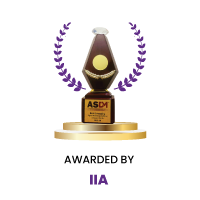
ASDM's commitment to quality education, practical training, and learner success has earned recognition from respected organizations, including NEBA, Zee Media, Global Icon, Group of India, IIA, and the Shyama Prasad Mukherjee Memorial Award. Since 2021, ASDM has consistently been recognized for excellence in Digital Marketing and AI education. These achievements reflect our dedication to delivering industry-relevant learning, innovation, and career-focused training that prepares learners for success in the evolving digital marketing landscape.

Trusted Digital Education Recognition

Practical Learning Achievement

Student Success Recognition

Industry-Oriented Training Award
Innovation in Skill Development
PLACEMENTS & CAREER OUTCOMES
See Where Our Students Are Working Today
Real outcomes from ASDM Surat learners - placements, hikes & freelance wins powered by practical training.
ASDM Surat Placement Snapshot
Latest numbers with updated data
1.16 Cr
Highest Package
Average packages range from Rs. 3-5
LPA
Earn 50,000+ as a Freelancer
in just 3 Months
2,500+
companies in ASDM's hiring network
Based on ASDM internal training & placement support data.
Students Placed at Digital-First Companies
Latest top recruiters.










Internship Support
Interview Prep
Portfolio + Live Projects
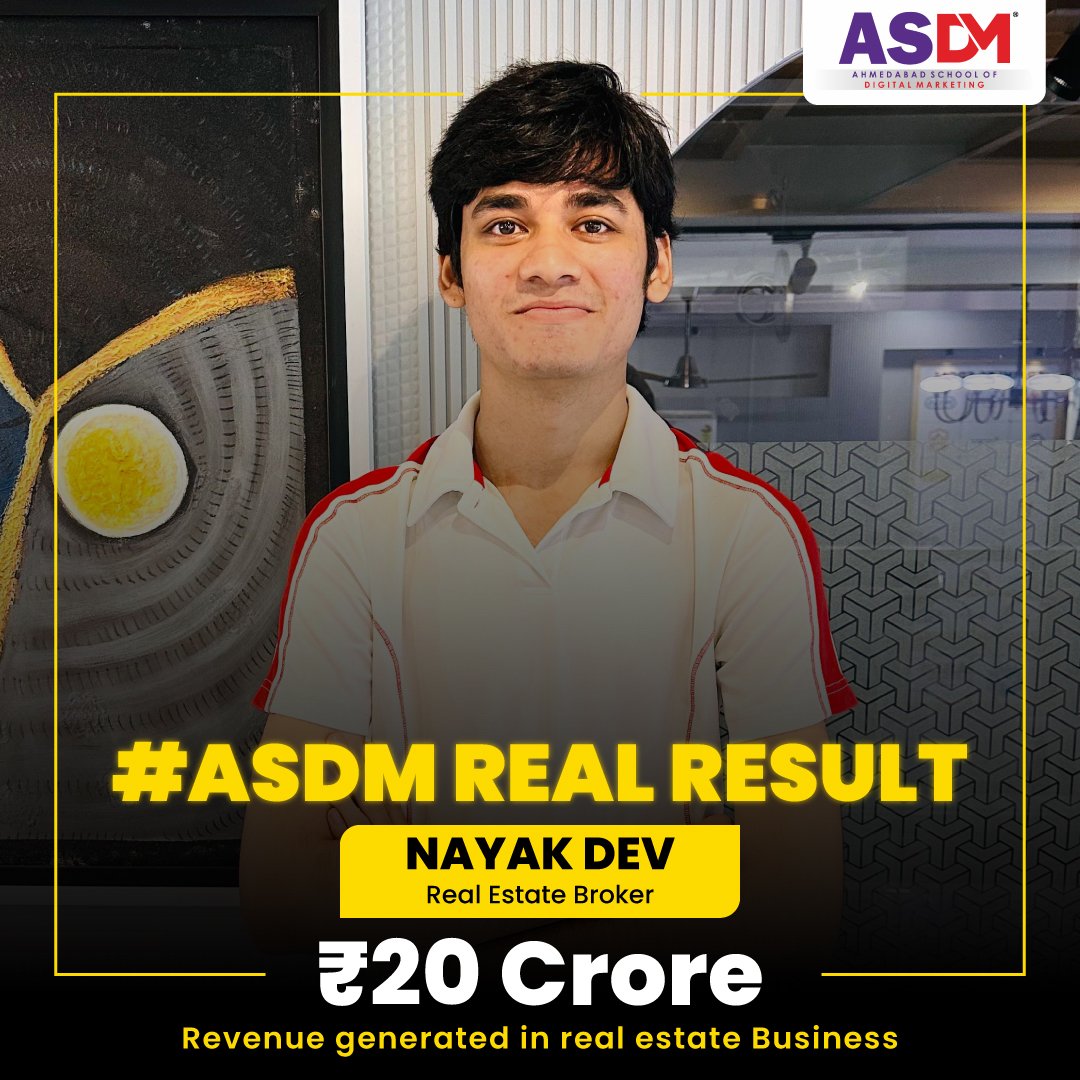
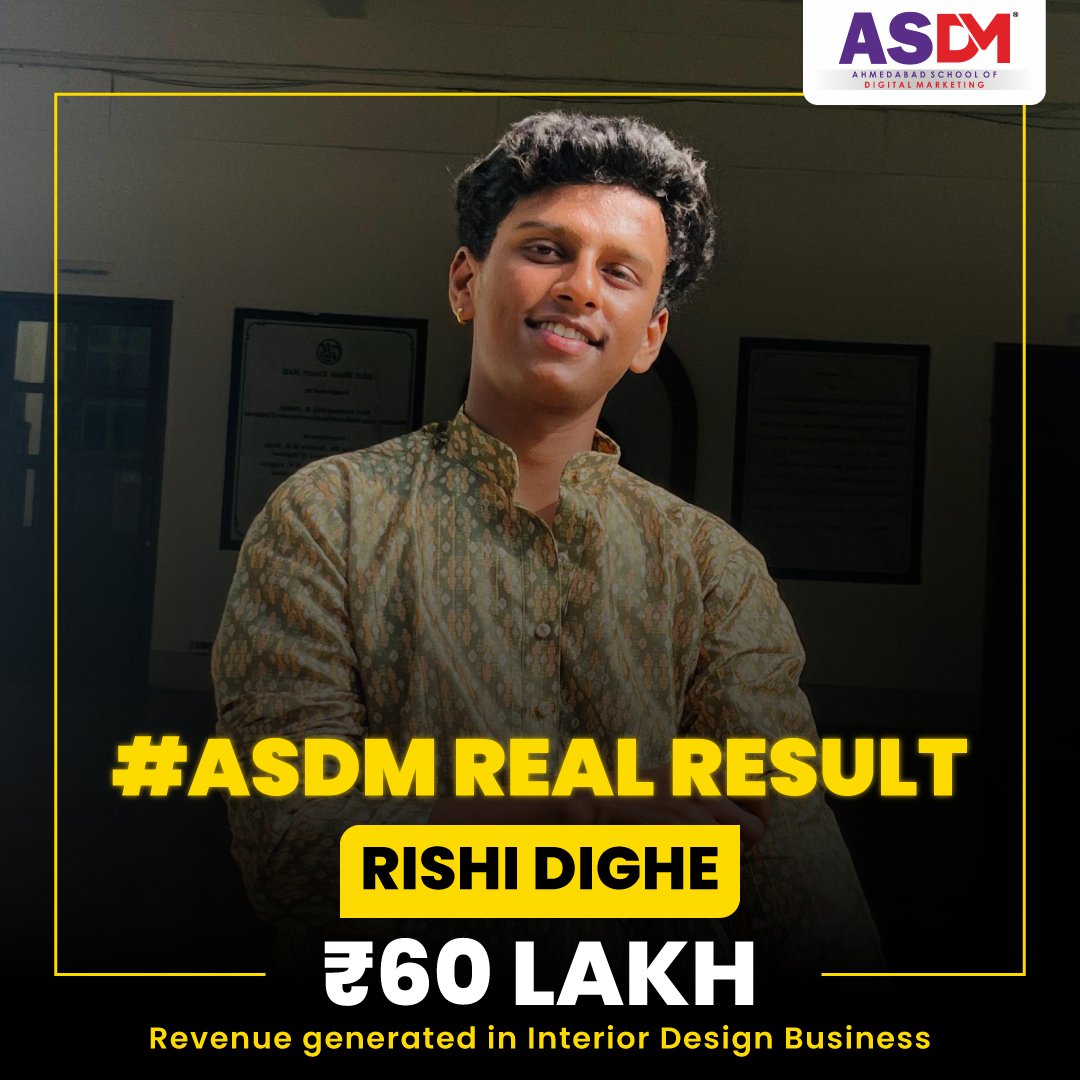
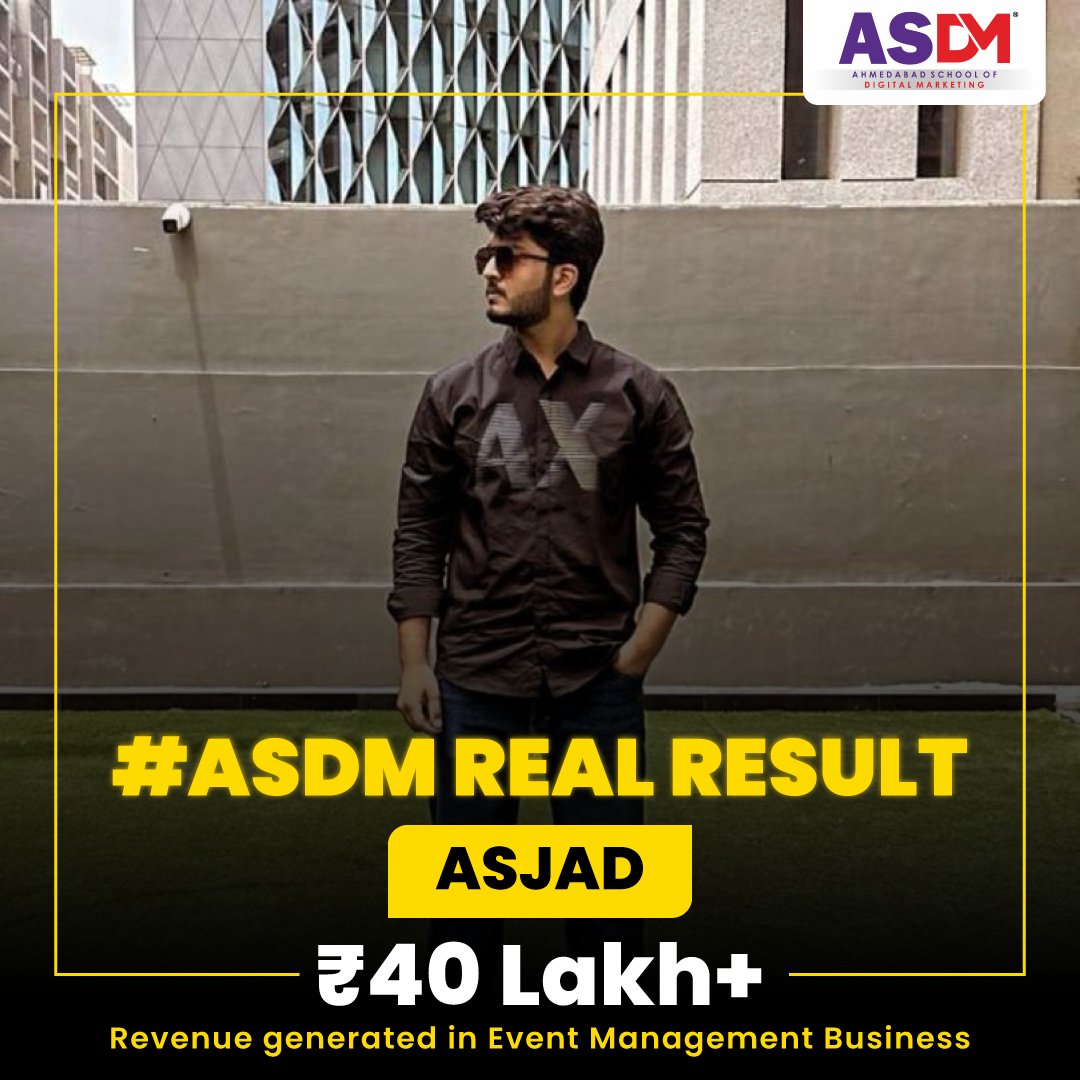
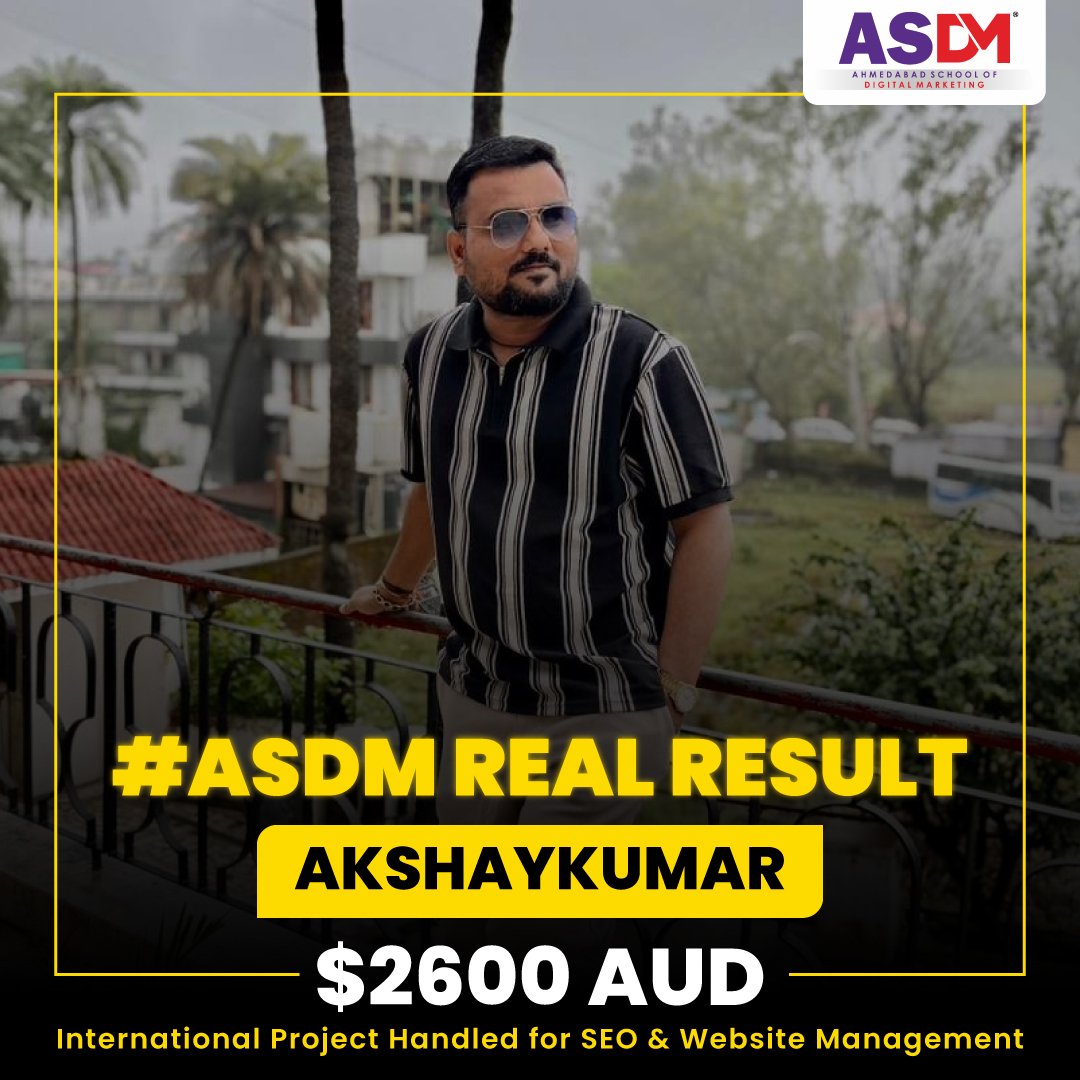
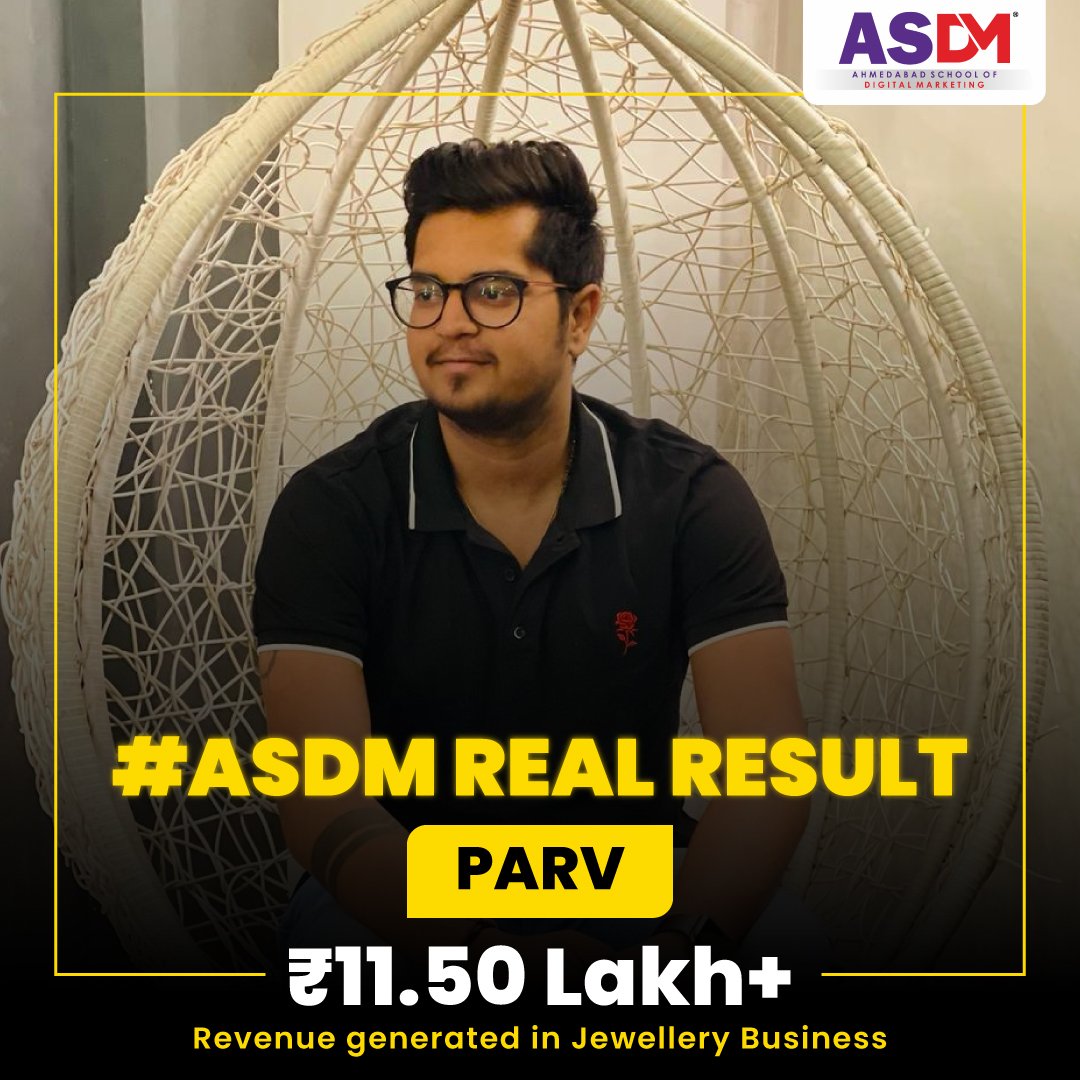
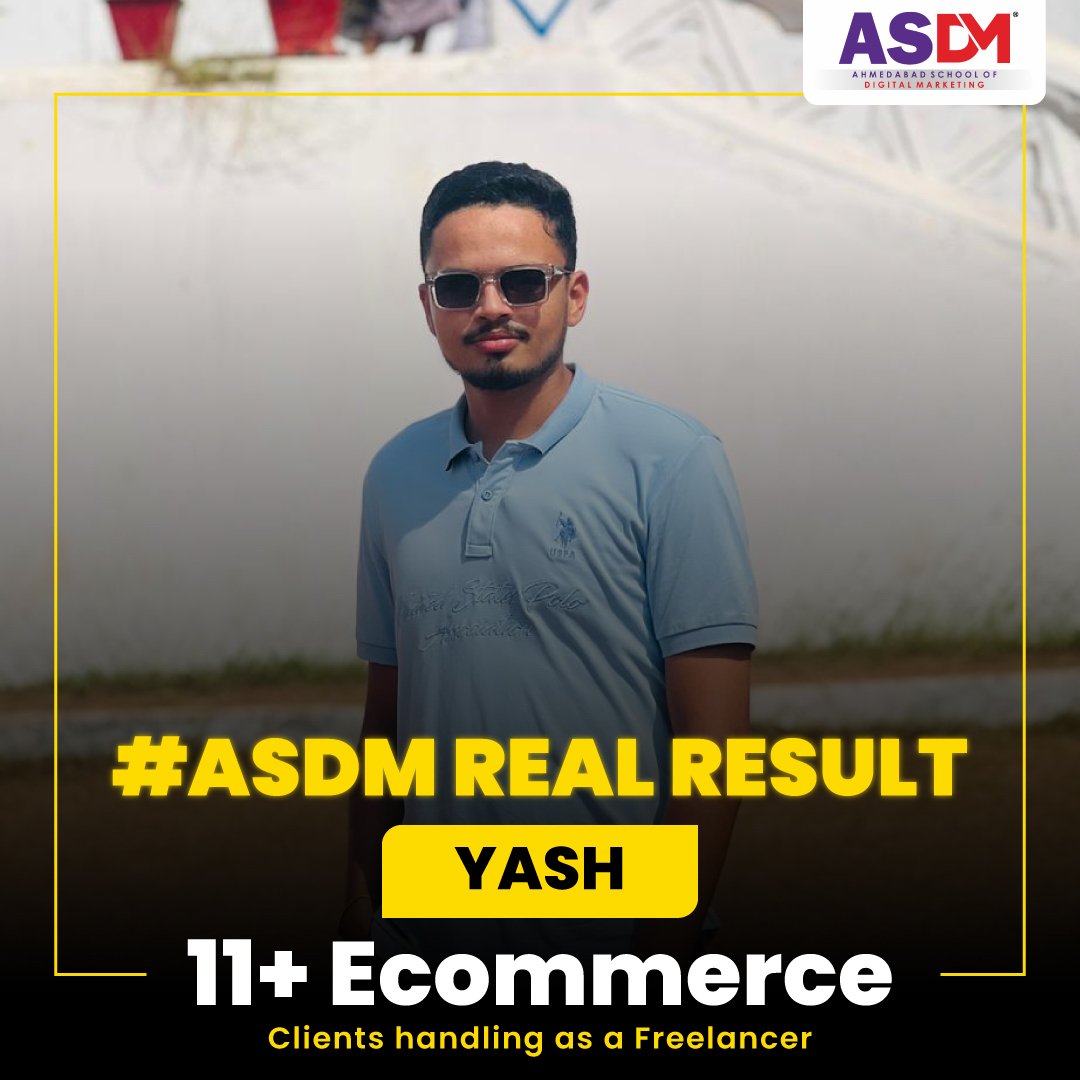
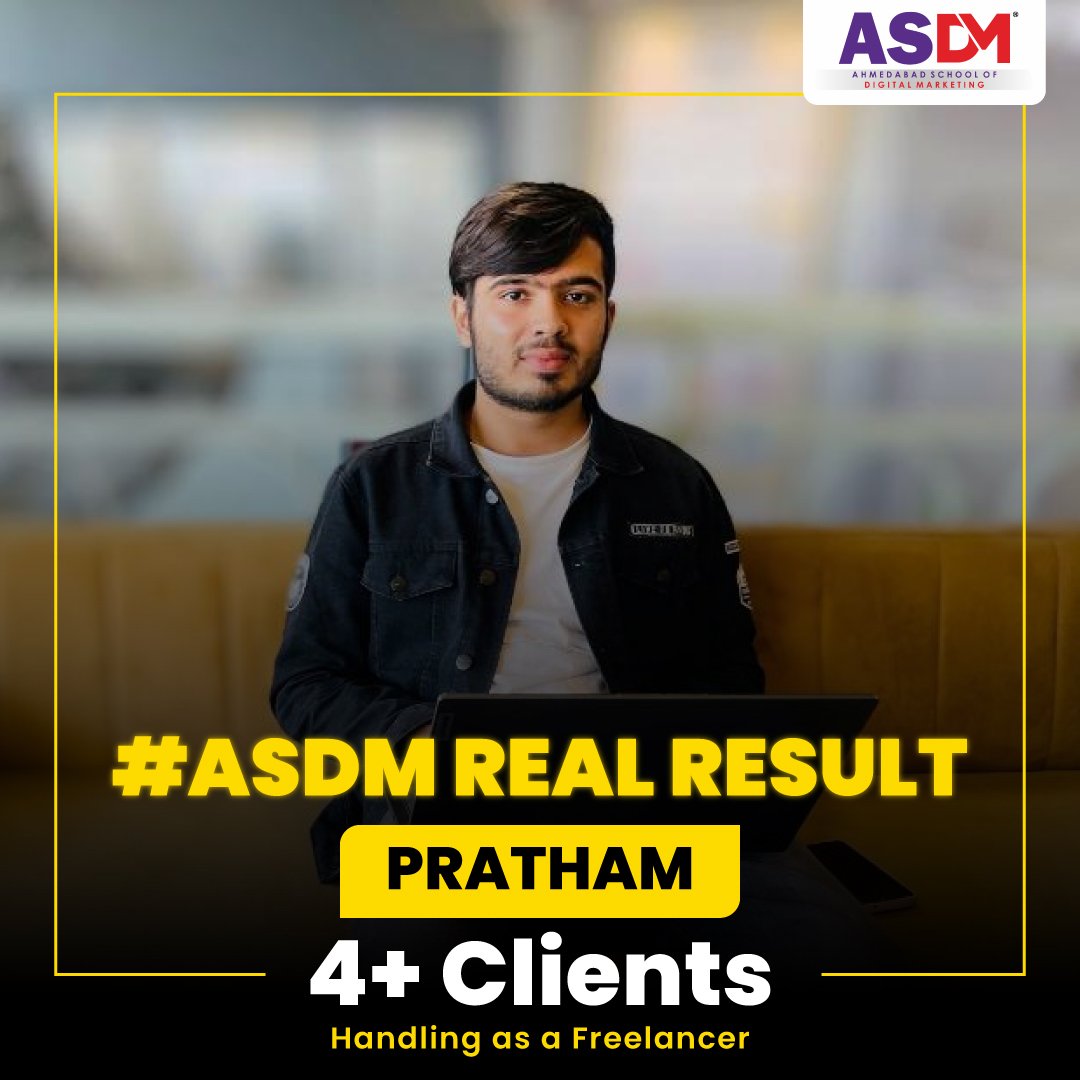
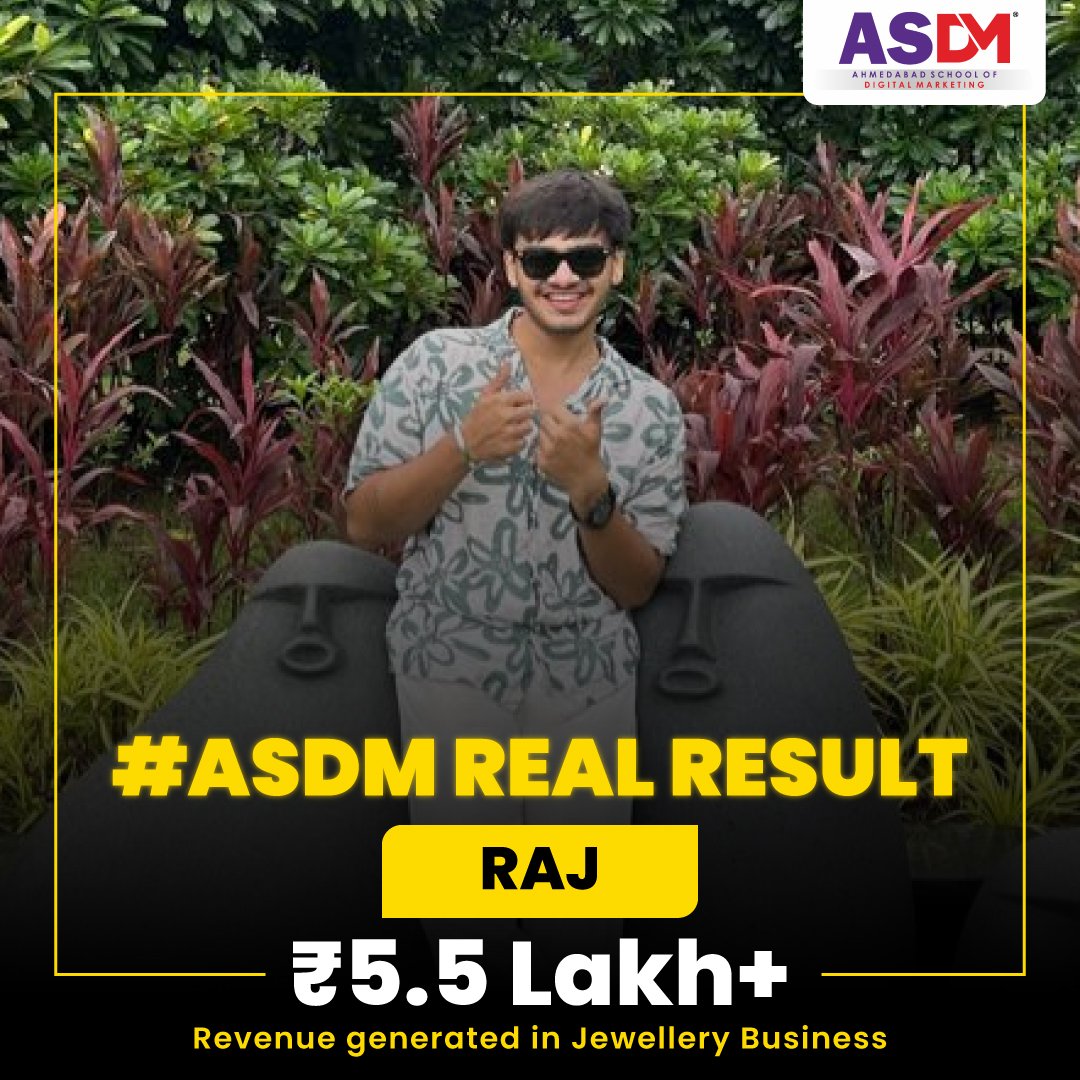
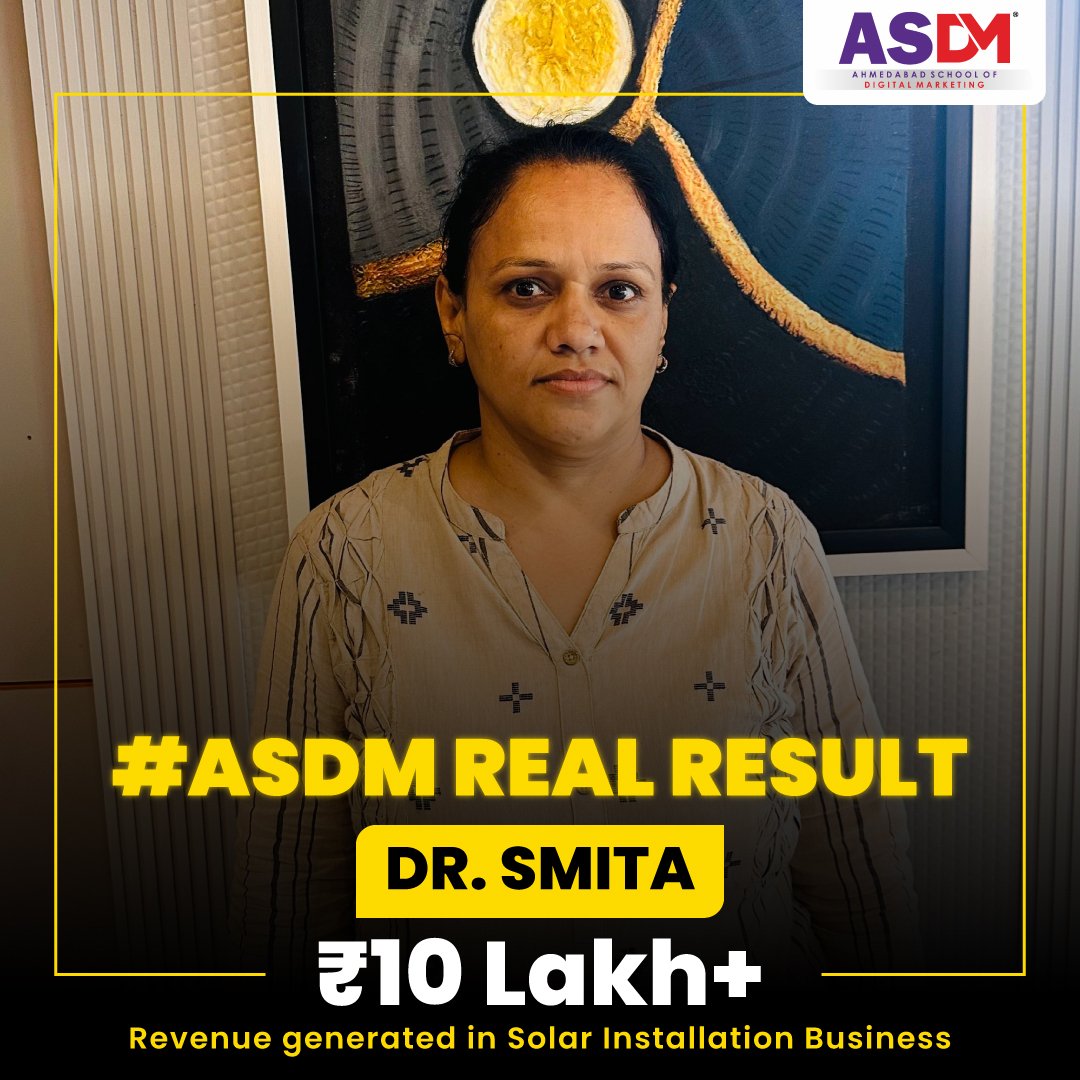
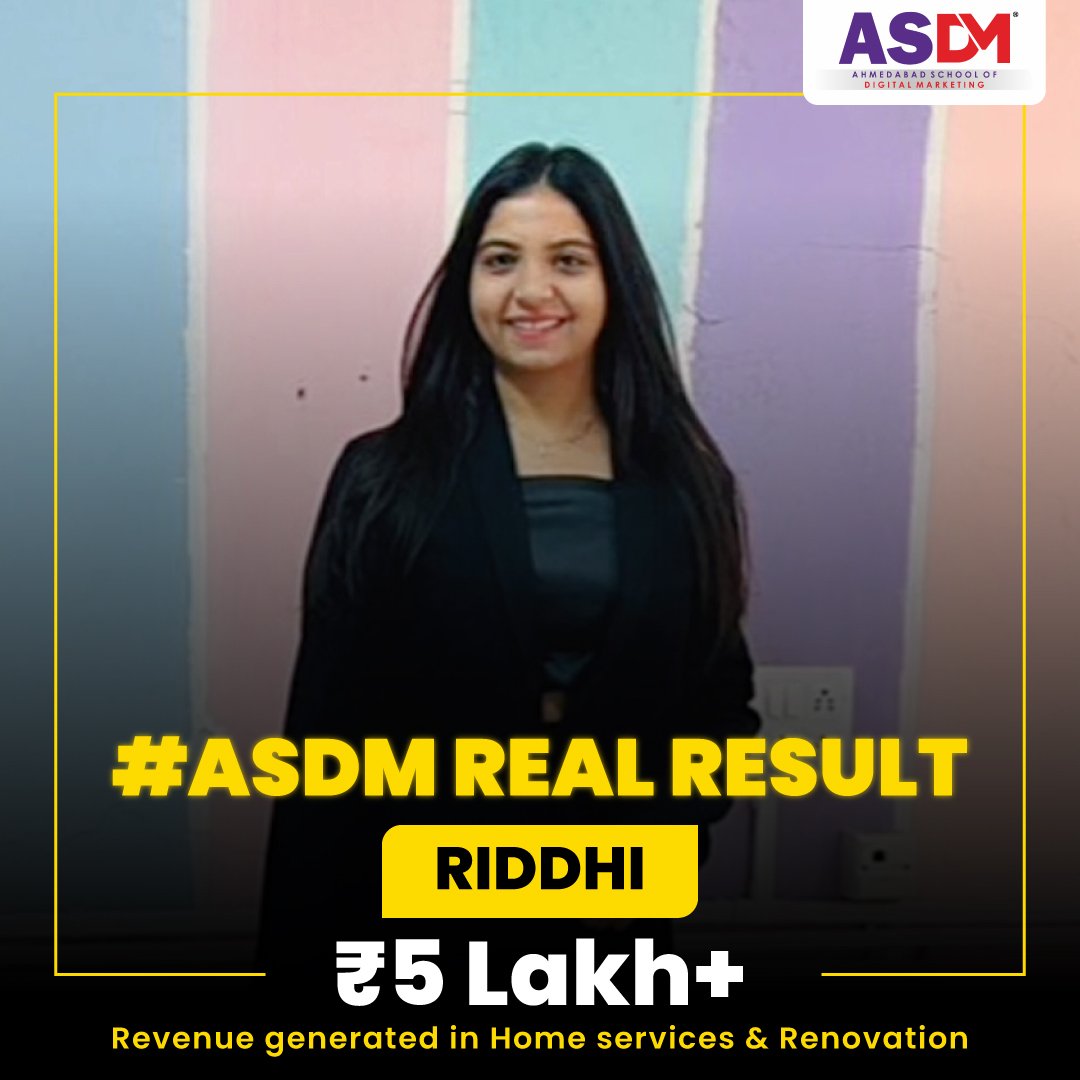
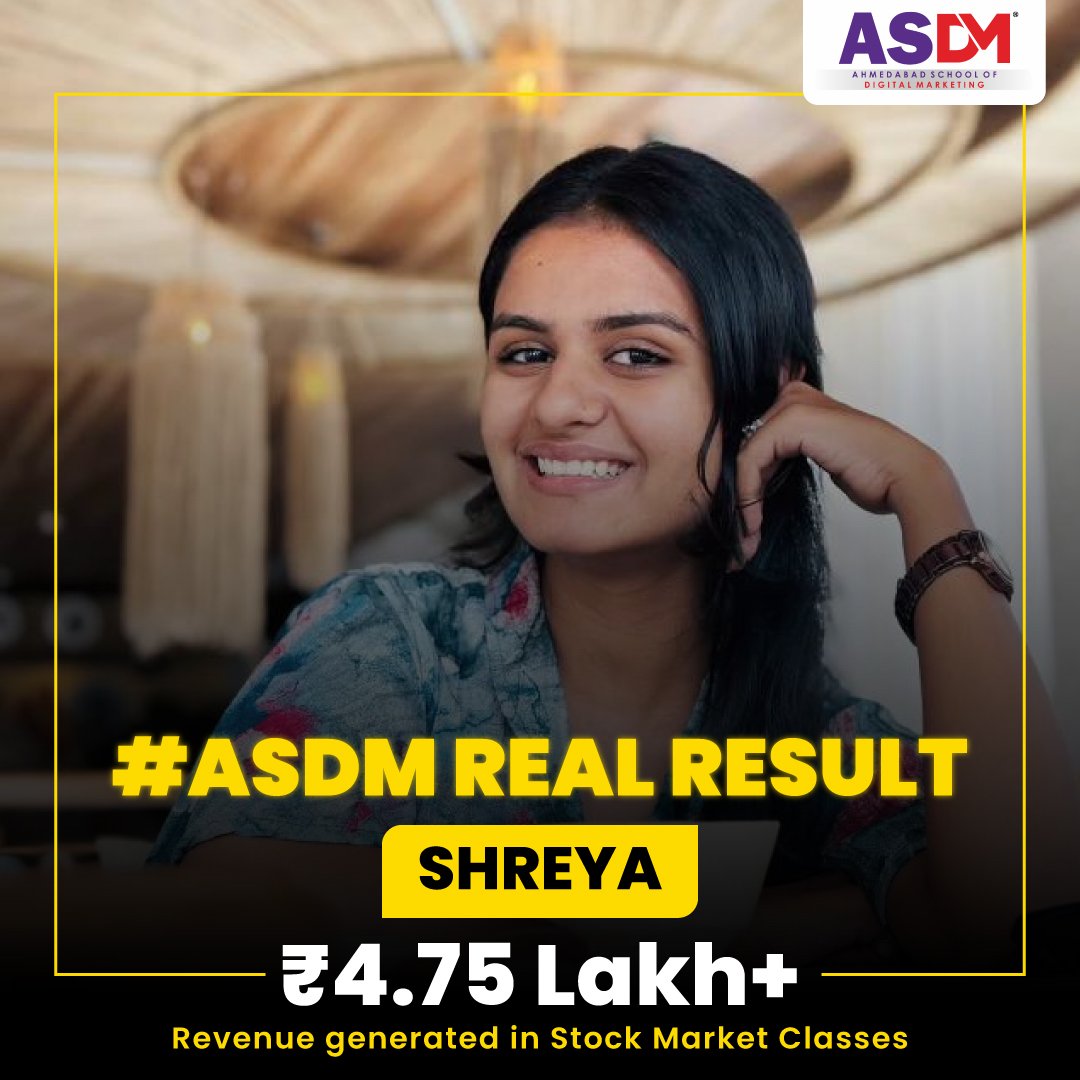
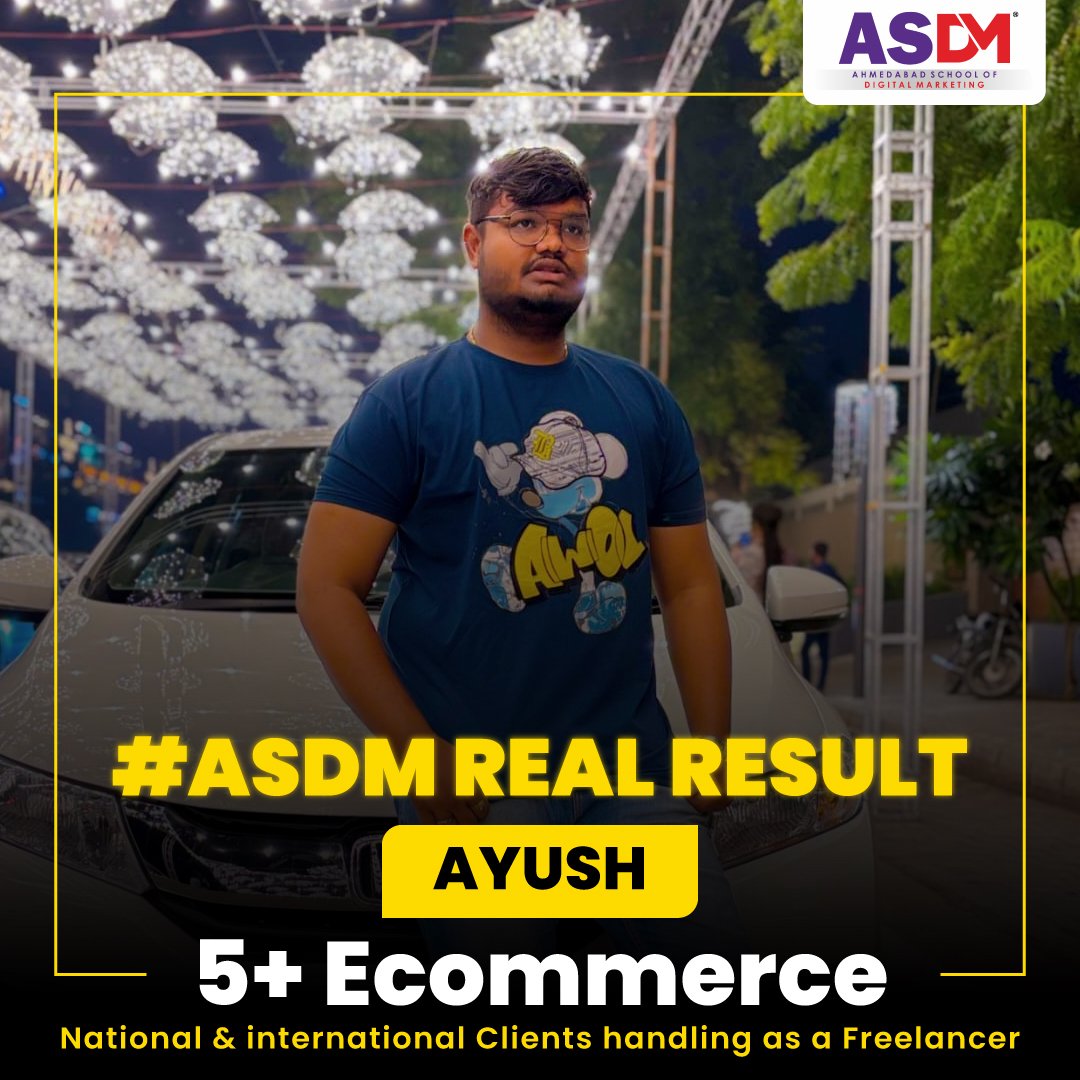
#Real Results
From Learning to Earning With ASDM Digital Marketing Course : Student Real Business Growth

Placement & Career Support
50,000+ Placements - Real Career Growth
ASDM has helped thousands of students build careers with a structured placement ecosystem - from portfolio to direct interviews.
Recruiters, Brands & Training Participants
Real companies • real roles • real outcomes







Our Trainers
Meet the People Behind ASDM Training
Learn from experienced mentors who teach SEO, Google Ads, Paid Ads, analytics, and AI-driven marketing with practical depth that helps brands grow and learners become job-ready.
 Digital Marketing
Love Tyagi
Founder & Digital Marketing Consultant
Love helps learners master SEO, Performance Marketing, and AI through practical strategies, real campaigns, and industry-focused training.
- Performance marketing for lead generation.
- Practical SEO for organic growth.
- AI tools for faster marketing workflows.
Best for: Students, Job Seekers, Freelancers, Business Owners, and Agency Professionals who want practical digital marketing skills.
 Paid Media
Ankit Rajput
SEM & Social Media Mentor
Ankit specializes in PPC advertising and social media marketing, helping learners create high-performing ad campaigns that generate quality leads and measurable business results.
- Google & PPC advertising.
- Instagram and LinkedIn marketing.
- Lead generation and campaign optimization.
Best for: Learners aiming for paid media roles, performance marketing careers, and high-intent lead generation.
 Automation
Jay Rathod
Digital Marketing & Automation Mentor
Jay helps learners leverage digital marketing, lead generation, and AI tools to streamline workflows, improve campaign performance, and achieve measurable business growth.
- Lead generation strategies.
- AI tools and marketing automation.
- Digital marketing campaign planning.
Best for: Students and business owners who want to generate quality leads, automate tasks, and scale their marketing with AI.
 E-commerce
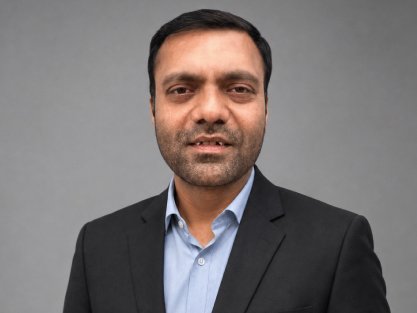
Vivek Kadia
E-commerce Marketing Mentor
Vivek helps learners grow online businesses through e-commerce marketing, shopping ads, marketplaces, and dropshipping using practical, results-driven strategies.
- E-commerce website marketing.
- Shopping Ads and marketplaces.
- Dropshipping and online sales.
Best for: Learners, online store owners, and freelancers who want to increase sales and scale their e-commerce business.
 SEO Strategy
Tejas Panchal
Technical SEO Lead
Tejas helps learners master Search Engine Optimization (SEO) through practical strategies, technical audits, and content optimization to improve organic visibility and long-term website growth.
- Technical SEO and website optimization.
- On-page, off-page, and Local SEO.
- Organic growth and SEO strategy.
Best for: Learners who want to rank websites, improve search visibility, and build a strong foundation in SEO.
 Paid Ads
Ritik Sharma
Paid Ads Mentor
Ritik specializes in Google Ads, Meta Ads, and Conversion Rate Optimization (CRO), helping learners create high-performing campaigns that generate quality leads and measurable results.
- Google Ads and Meta Ads.
- Lead generation strategies.
- Conversion Rate Optimization (CRO).
Best for: Learners who want to build brand visibility, drive social media growth, and run high-performing paid advertising campaigns.
 Google Ads
Dipak Ladhani
Google Ads Mentor
Dipak trains learners in Google Ads campaign planning, keyword targeting, bidding, and optimization with a practical focus on lead generation and ROI.
- Search, display, and lead generation ads.
- Keyword research and campaign structure.
- Budget planning, tracking, and optimization.
Best for: Learners who want to run Google Ads, generate quality leads, and understand paid search campaign performance.
 Graphic Design
Vicky Prajapati
Graphic Designing Mentor
Vicky helps learners build strong design fundamentals for digital creatives, social media posts, ad banners, and brand communication.
- Social media creative design.
- Ad banner and campaign artwork.
- Visual hierarchy, layout, and branding basics.
Best for: Learners who want to create professional marketing creatives, social posts, and brand-focused visual content.
 Graphic Design
Dharmesh Bavri
Graphic Designing Mentor
Dharmesh trains learners to design clean, campaign-ready graphics using practical tools, creative concepts, and digital marketing design principles.
- Marketing creatives and post design.
- Design tool practice and workflows.
- Creative concepts for digital campaigns.
Best for: Learners who want hands-on graphic design practice for ads, social media, and digital brand campaigns.
 SEO Strategy
Bhavik Makwana
SEO Mentor
Bhavik guides learners through SEO strategy, keyword research, on-page optimization, and practical methods to improve search visibility.
- Keyword research and SEO planning.
- On-page SEO and content optimization.
- Website ranking and organic traffic growth.
Best for: Learners who want to rank websites, build SEO fundamentals, and grow organic traffic with practical techniques.
 Meta Ads
Sagar Desai
Meta Ads & Social Media Mentor
Sagar teaches Meta Ads and social media marketing with practical campaign setup, audience targeting, creative planning, and lead-focused optimization.
- Facebook and Instagram ad campaigns.
- Audience targeting and creative testing.
- Lead generation and campaign optimization.
Best for: Learners who want to run Meta Ads, grow social media presence, and generate leads through paid social campaigns.
 Graphic Design
Abhishek
Graphic Designing Mentor
Abhishek helps learners design digital creatives for social media, ads, and branding with practical attention to layout, colors, and campaign clarity.
- Social media post and banner design.
- Brand creatives and visual consistency.
- Design practice for marketing campaigns.
Best for: Learners who want to create clean, professional designs for ads, social media, and business branding.
 SEO Strategy
Pavan Punjabi
SEO Mentor
Pavan trains learners in practical SEO, content optimization, search intent, and website improvement methods for long-term organic growth.
- Search intent and keyword mapping.
- On-page SEO and content updates.
- Organic ranking and visibility improvement.
Best for: Learners who want to strengthen SEO skills, optimize website content, and improve Google search performance.
 Meta Ads
Ashish
Meta Ads & Social Media Mentor
Ashish supports learners in Facebook and Instagram advertising, social media campaign planning, audience targeting, and practical ad optimization.
- Meta Ads campaign setup.
- Social media audience targeting.
- Creative testing and lead optimization.
Best for: Learners who want to manage Facebook and Instagram ads, generate leads, and improve social media campaign results.
Digital Marketing Career Opportunities After Completing the Course
Digital marketing is one of the fastest-growing career fields, offering opportunities across startups, agencies, e-commerce companies, corporate brands, and freelance businesses. After completing Digital Marketing Course in Surat, you can pursue entry-level roles, specialize in high-demand areas, or build your own freelance or digital marketing business. As you gain practical experience and certifications, your career can progress into leadership and strategic roles.
Note: Salary ranges below are approximate and may vary based on skills, experience, company, location, and market demand.
High Demand Roles
Career Ladder
Salary Range View
Intern
R Role Data
Digital Marketing Intern
Yearly Package
Rs.1,80,000 - Rs.2,40,000
Work on real SEO, social media, and reporting tasks.
Ideal for students and freshers starting their digital marketing journey
Fresher (0-1 yr)
R Role Data
Junior Digital Marketing Executive
Yearly Package
Rs.3,00,000 - Rs.5,00,000
Run powerful Meta & Google Ads campaigns.
Track and optimize performance with GA4.
1-3 yrs
R Role Data
Digital Marketing Executive / Specialist
Yearly Package
Rs.4,50,000 - Rs.8,00,000
Lead and scale SEO, PPC, and content performance channels.
Drive smart optimization and boost conversions with strategic thinking.
3-5 yrs
R Role Data
Senior Executive / Team Lead
Yearly Package
Rs.8,00,000 - Rs.14,00,000
Lead high-performing teams and execute winning marketing strategies.
Scale budgets smartly and take full ownership of ROI growth.
MOST IN-DEMAND
5-7 yrs
R Role Data
Digital Marketing Manager
Yearly Package
Rs.14,00,000 - Rs.22,00,000
Lead multi-channel strategies and drive high-impact marketing growth
Own targets, funnels, and forecasting to maximize ROI.
7-10 yrs
R Role Data
Senior Manager / Head of Digital
Yearly Package
Rs.22,00,000 - Rs.35,00,000
Drive overall growth and lead high-performance digital teams.
Align brand strategy with performance to scale the business.
10+ yrs
R Role Data
Director / Chief Digital Officer
Yearly Package
Rs.35,00,000 - Rs.50,00,000+
Define the company's digital vision and drive enterprise-level growth.
Scale teams, budgets, and strategic partnerships for massive impact
Who can Join this Program
Whether you're starting your career, looking to upskill, growing a business, or planning to work independently, ASDM's Digital Marketing Course in Surat is designed for learners from diverse backgrounds. With practical training, AI-powered learning, and real-world projects, this program helps you build the digital marketing skills needed to achieve your personal and professional goals.
MOST POPULAR
Students & Freshers
Start your digital marketing career with practical training, live projects, AI-powered tools, and dedicated placement assistance. Build industry-ready skills and gain the confidence to step into entry-level digital marketing roles.
Practical Training | Placement Assistance
CAREER SWITCH
Working Professionals
Upgrade your digital marketing skills to stay competitive in today's AI-driven workplace. Learn advanced strategies, performance marketing, analytics, and automation to support career growth and explore new opportunities.
Career Advancement | AI-Powered Skills
SCALE FASTER
Agency Owners
Strengthen your agency with advanced digital marketing strategies, AI-powered workflows, campaign optimization, and scalable systems that help improve client results and business efficiency.
Scale Operations | Deliver Better Results
EXPAND SERVICES
Coaches & Consultants
Enhance your expertise with practical digital marketing skills to improve your online presence, attract qualified leads, and offer more comprehensive solutions to your clients.
Personal Branding | Lead Generation
WORK FROM HOME
Homepreneurs
Learn how to market your products or services online using SEO, social media, paid advertising, and content marketing to grow your business from anywhere.
Grow Your Business | Flexible Learning
GO INDEPENDENT
Freelancers
Build in-demand digital marketing skills, create a professional portfolio, learn client acquisition strategies, and confidently deliver services across SEO, advertising, content marketing, and social media.
Freelancing Skills | Portfolio Development
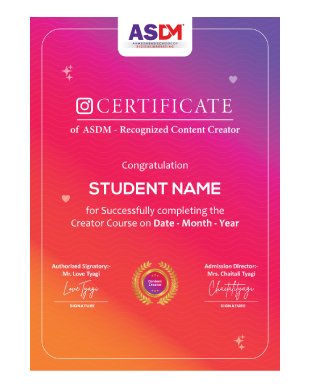
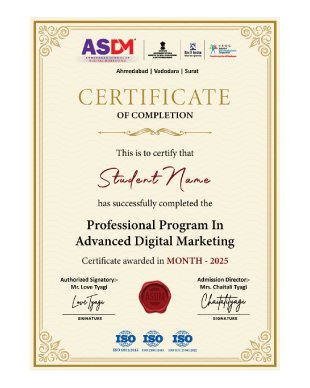
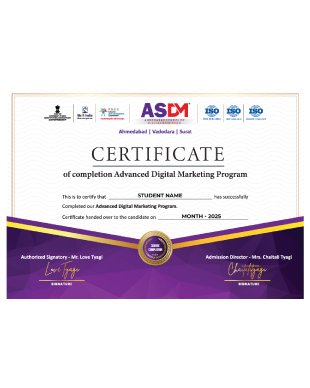
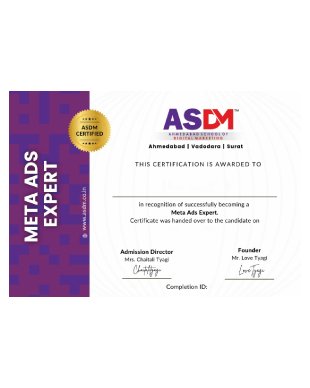
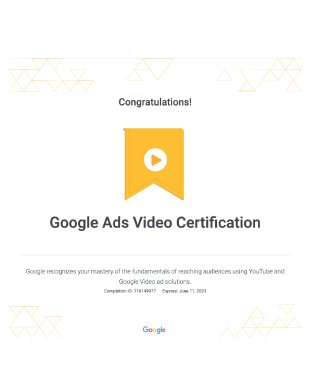
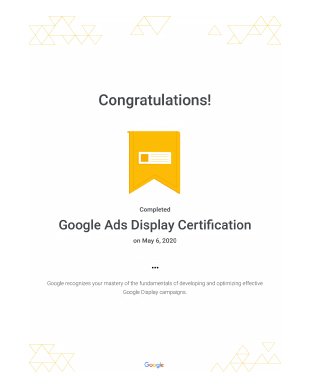
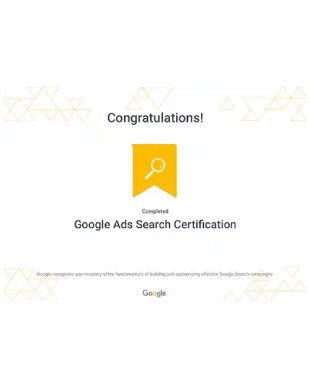
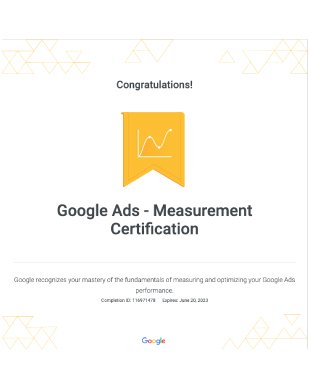
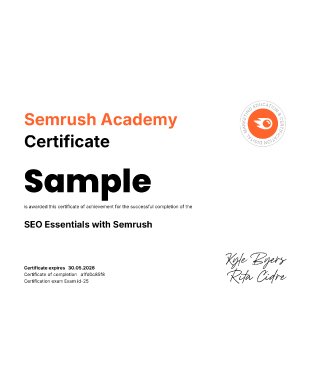
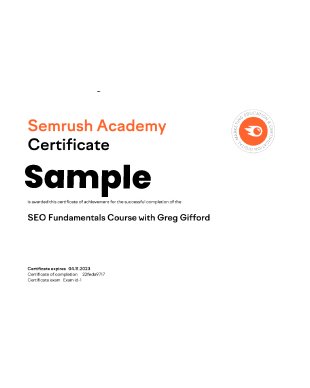
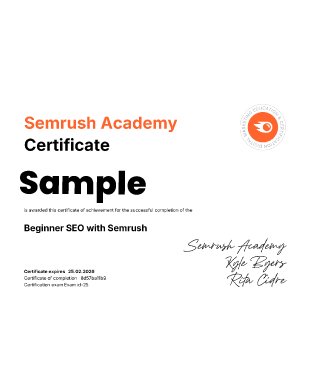
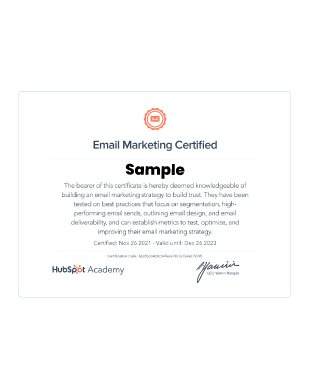
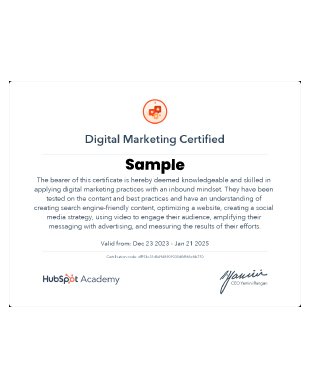
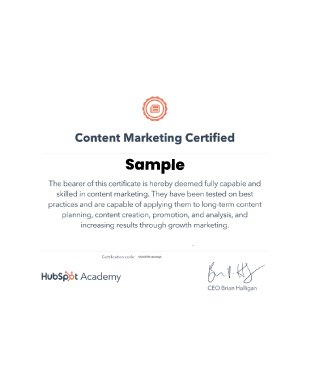
Earn 15+ Industry-Recognized Digital Marketing Certifications
Stand out in today's competitive job market by earning 15+ industry-recognized digital marketing certifications as part of ASDM's Digital Marketing Course in Surat. Along with your ASDM Institute certification, you'll have the opportunity to prepare for certifications from leading platforms such as Google, Meta, HubSpot, Semrush, and other widely used digital marketing tools. These certifications help validate your skills, strengthen your resume, enhance your professional credibility, and showcase your expertise to potential employers and clients.
Live Projects
Work on Real Projects That Build Your Portfolio
Gain practical experience by working on live projects, real brand case studies, and portfolio-ready assignments throughout ASDM's Digital Marketing Course in Surat. Instead of learning only through theory, you'll apply digital marketing concepts to real-world scenarios using industry-standard tools and AI-powered workflows. From SEO and Google Ads to Paid Ads, content marketing, analytics, and e-commerce campaigns, every project helps you build a professional portfolio that showcases your skills and prepares you for job interviews, freelance opportunities, or business growth.
 Dhwani
Watch Video
Dhwani
Watch Video
Dhwani
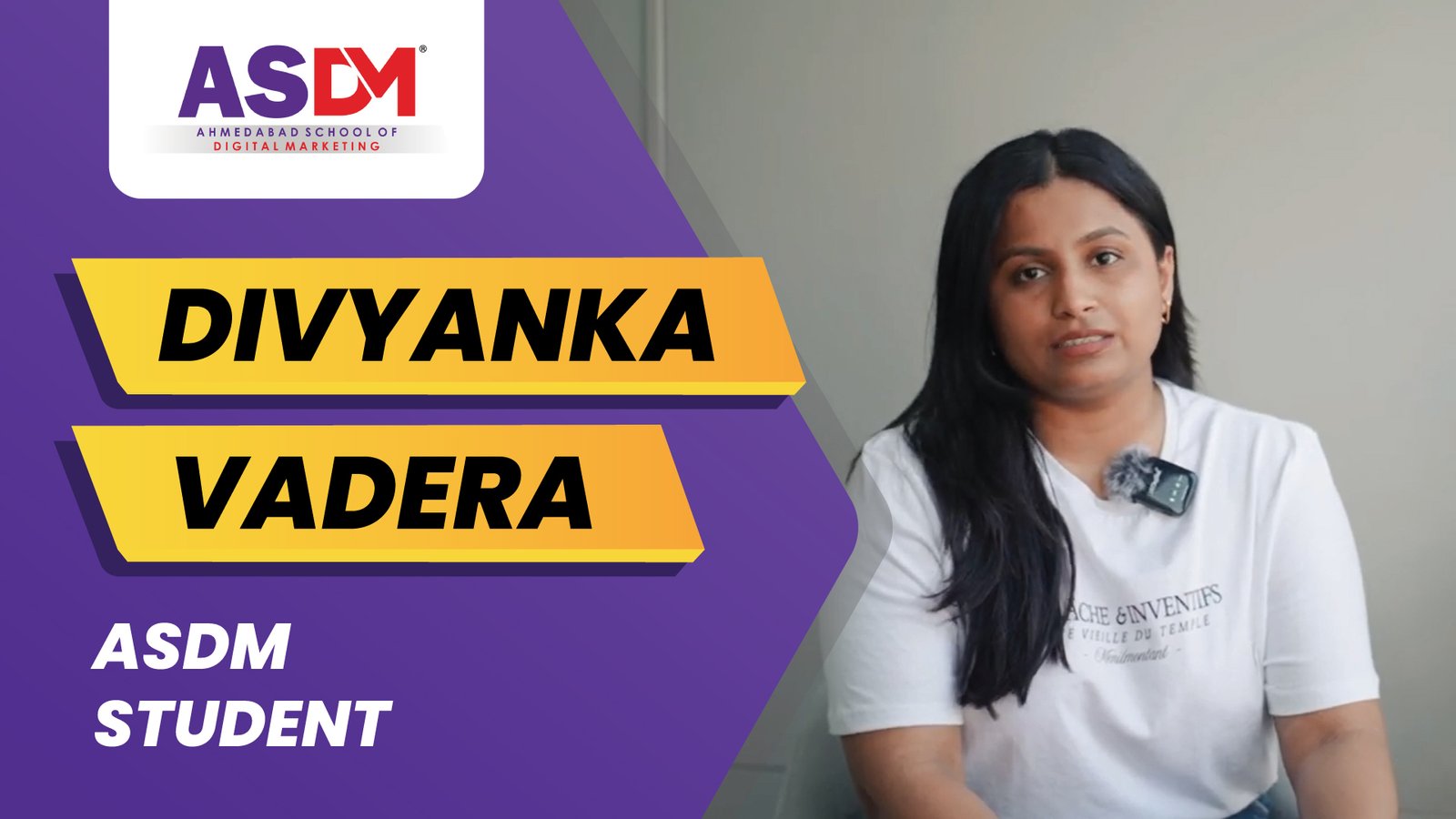
19th year old Student Placed
Started her career as a Social Media Executive at Marengo CIMS Hospital after building practical digital marketing skills, live project experience, and industry-ready expertise through ASDM's hands-on training.
 Prachi
Watch Video
Prachi
Watch Video
Prachi
Placed at Social Media Executive
Began her journey as a Social Media Executive at Marengo CIMS Hospital after gaining practical digital marketing skills, live project experience, and industry-focused training at ASDM Institute.
 Hina
Watch Video
Hina
Watch Video
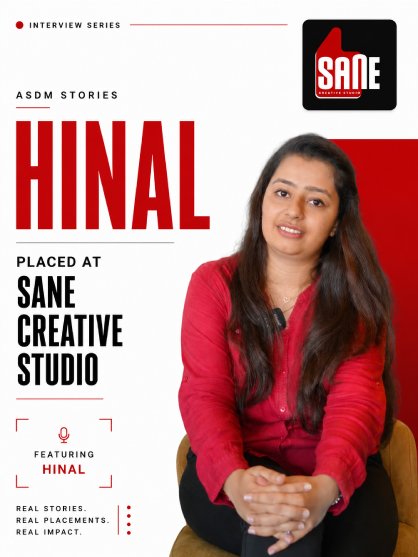
Hina
Placed as an Social Media Manager
Secured a Social Media Manager role at Sane Creative Studio after developing practical digital marketing skills, live project experience, and industry-focused expertise through ASDM's hands-on training.
 Rishika
Watch Video
Rishika
Watch Video
Rishika
ASDM Student Success Story
Moved from Daman to join ASDM Digital Marketing Course and transformed her passion into practical digital marketing skills with industry-focused training.
 Manthan
Watch Video
Manthan
Watch Video
Manthan
Student Placement Story
Built practical digital marketing skills through ASDM's hands-on training and started applying real campaign knowledge in a professional role.
STUDENT REVIEWS
What Students Say About ASDM
Real feedback from learners who trained with ASDM.
S
SAVANI Shubham
Student • Surat
ASDM Marketing Classes in Surat are absolutely outstanding! I truly loved this class and learned so much more than I expected. The trainers explain every concept in a very clear, practical, and easy-to-understand way. From digital marketing strategies to real-world examples, everything was taught in a very professional yet friendly environment. The guidance, support, and hands-on learning helped me gain real confidence and skills. If you are looking for the best marketing classes in Surat, ASDM is the perfect place. Highly recommended for anyone serious about their career growth!
P
Patel Nency
Student • Surat
ASDM has made digital marketing super easy and fun for me! The trainers explain everything so clearly and give real examples, so learning never feels boring. The best part is the practical work - we actually get to create ads and try everything ourselves. I have gained a lot of confidence and new skills. Loved my experience here!
P
Mr. Paras Waghela
Student • Surat
If you're looking for the best digital marketing course in Surat, I can confidently say that ASDM is the place to be. What truly sets them apart is their sincerity and genuine interest in making sure we grow digitally - not just learn for the sake of learning.
R
Ruchi Vachhani
Student • Surat
ASDM Institute is one of the best places to learn Digital Marketing course in surat. The trainers explain concepts clearly with practical examples and live projects. I gained real confidence to work on ads and social media campaigns.
Our Stories & Latest Blog
Fresh insights, career guides and practical digital marketing learning - updated regularly.
How Much Does Google Ads Cost in 2026? Complete Budget, CPC, Pricing & ROI Guide
If you are planning to advertise your business on Google, one of the first questions you will probably ask is:…
What You’ll Learn in a Digital Marketing (Course Syllabus + Modules)
Surat's business landscape has changed fast. Textile houses, diamond exporters, D2C brands, and local service businesses that once relied purely…
Top 120+ Social Media Marketing Interview Questions for Freshers (Updated 2026 with Expert Answers)
Social Media Marketing is one of the fastest-growing career opportunities in 2026, with businesses actively hiring professionals to manage Facebook,…
Top 60+ SEO Interview Questions for Freshers (Updated 2026)
The demand for SEO professionals is growing faster than ever before. As businesses continue investing in digital marketing, companies need…
Visit Us
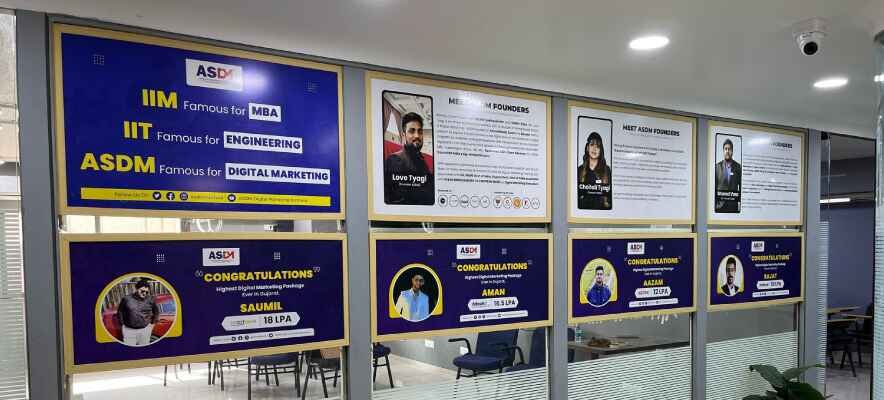
Visit ASDM's Digital Marketing Training Centre in Surat
Experience practical digital marketing training in a professional classroom environment. Visit our Surat institute, meet our trainers and explore how our live-project learning works.



Our Location
Rajoo India, 501 Solaris Cube,
Besides Maharana Pratap Road,
Behind RR Mall, Vesu,
Surat, Gujarat - 395007
Besides Maharana Pratap Road,
Behind RR Mall, Vesu,
Surat, Gujarat - 395007
Nearby Landmark
Behind RR Mall, Vesu
Classroom Timings
Weekdays10:00 AM - 6:00 PM
Saturday10:00 AM - 6:00 PM
Sunday ClosedVisit Monday to Saturday
Our Training Facilities
Smart Classroomswith projectors
Air-Conditionedclassrooms
High-Speed Wi-Filearning environment
Comfortable Seatingand spacious labs
Power Backupavailable
Practical Learningwith live projects
Visit Us & Experience the ASDM Difference
Book a free counselling session and explore how ASDM Surat can help you build your digital marketing career.
WE ANSWER YOUR QUESTIONS
Frequently Asked Questions For Digital Marketing Course in Surat
To help you make the right decision, we answer the most common questionsut our course
Yes. ASDM is one of the most trusted digital marketing institutes in Surat, known for 100%
practical training, AI-integrated curriculum, experienced trainers, and strong career outcomes for
students, professionals, and business owners.
The Digital Marketing Course in Surat at ASDM is a 4-month intensive program with flexible batch
timings, designed to make students job-ready in a short time.
Yes. ASDM Surat offers 100% placement assistance, including interview preparation, resume
building, job referrals, freelancing guidance, and business mentorship.
ASDM stands out because of its AI-powered training approach, live project exposure, real campaign
execution, small batch mentoring, and focus on real-world results instead of theory only.
This course is ideal for students, working professionals, freelancers, business owners, career
switchers, and housewives. No prior marketing experience is required.
Yes. ASDM Surat integrates AI tools like ChatGPT, AI content creation, AI SEO tools, AI ads
optimization, and automation workflows, preparing students for the future of digital marketing.
Yes. Business owners join ASDM to generate leads, increase sales, reduce dependency on agencies,
and scale their business using SEO, social media, paid ads, and AI marketing systems.
You can enroll by booking a free counselling session, attending a demo class, or directly
contacting the ASDM Surat team. Seats are limited to maintain training quality.
ASDM is a popular choice for a digital marketing course in Surat because it focuses on practical
learning, SEO, social media, and AI-driven marketing skills.
Most institutes in Surat typically charge Rs.20,000 to Rs.1,00,000 depending on course depth,
duration, mentoring, and placement support.
Absolutely. The course includes advanced SEO classes in Surat and a complete Social Media
Marketing course, covering Google SEO, Local SEO, Instagram, Facebook, LinkedIn, and AI-based
growth strategies.